Poe and Halloween Thoughts

“I shall perish,” said he, “I must perish in this deplorable folly…I have, indeed, no abhorrence of danger, except in its absolute effect — in terror. In this unnerved, in this pitiable condition, I feel that the period will sooner or later arrive when I must abandon life and reason altogether, in some struggle with the grim phantasm, FEAR.” — “The Fall of the House of Usher”

I love Halloween. It’s my favorite holiday, when I get to honor the age-old pagan tradition of putting on a mask and a costume to frighten the roaming spirits of All Souls’ Day away, becoming unrecognizable to friends and neighbors.  What is it about the macabre, the grotesque, the paranormal that is so fascinating? I’ve always been afraid of my own shadow ever since I could remember, because my imagination always got the best of me when alone, be it for better or, in many nocturnal cases, for worse.

Edgar Allan Poe is the iconic author for such times because of his initiation of the horror and detective genre in American literature, after having received wide acclaim upon the publication of “The Raven.” I think my first encounter with the tales of Edgar Allan Poe was as a child, when one day, my sister relayed to me the story of “The Tell-Tale Heart.” She would always summarize and pass on little things she learned or read at school to me — the plot of “Romeo and Juliet,” how to divide big numbers, the concept of masculine and feminine words in Spanish (which I could not wrap my head around at the time).  Anne Rice’s vampires, The X-files, Chinese ghost stories, and Poe’s creepy tales were our shared delight.

I remember the sudden horror that seized me when she was telling me how the narrator in “The Tell-Tale Heart” crept up on the old man every night at midnight to observe his glass eye under a beam of lantern light, watching and waiting. That disturbed pscyhe of the violent stalker and the unreliable narrator was what perturbed me most, the same one that the reader encounters in other stories like “The Cask of Amontillado” and “The Black Cat.” And more so when one gets the sensation that this narrator entrusts his dark deeds to the reader, who is addressed directly in second person and who is implicated as a sympathetic witness of sorts, perhaps because such demons exist latently in all of us: “You, who so well know the nature of my soul…”

And we don’t know whether to trust him or not. It’s the terror of not being able to gauge whether someone is in his right mind or suffering from a mental lapse. And when the narrator begins walling up his victim, hearing the beating heart of his dismembered roommate, seeing shadows of hung cats with their eyes gouged, there is a part of you that shudders yet at the same time revels in that madness and in Poe’s amazing craft of story-telling, his way of drawing the reader so close to a sickly, demented mind.

We visited his house in Philadelphia one warm autumn afternoon, after not having been there in ages, since we were school children on a field trip. The late sun threw the raven’s shadow onto the brick wall, and we wandered up into the house where he lived with his wife, Virginia, and her mother. Here, Poe lived in near-poverty while writing his stories and watched his wife die from tuberculosis, the same sickness of which his foster mother died. Even though he was plagued by personal demons and suffered spells of depression, the years he spent at this house were the happiest and the most productive for him as a writer. The dark cellar is remniscent of the one described in “The Black Cat.”
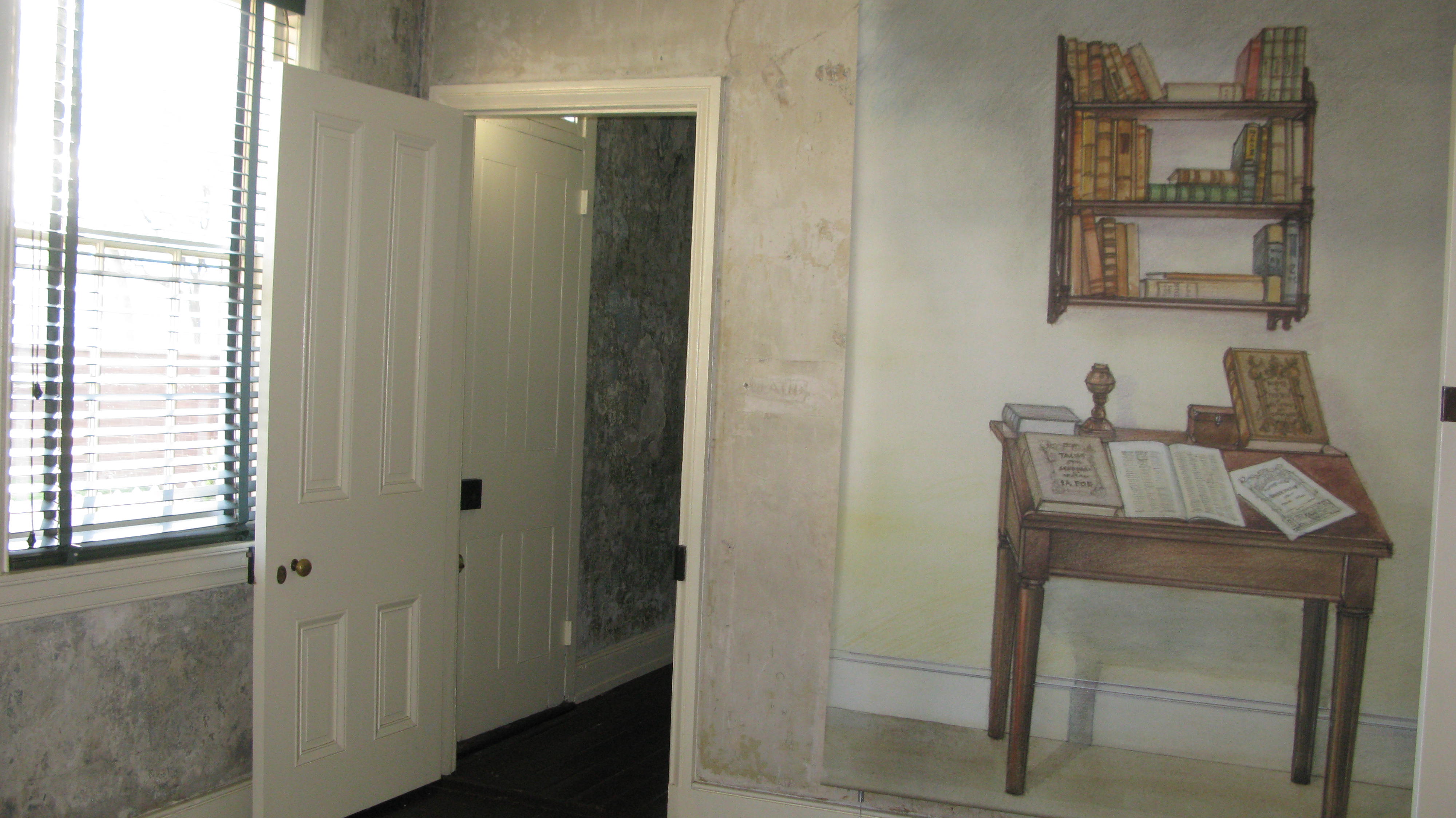
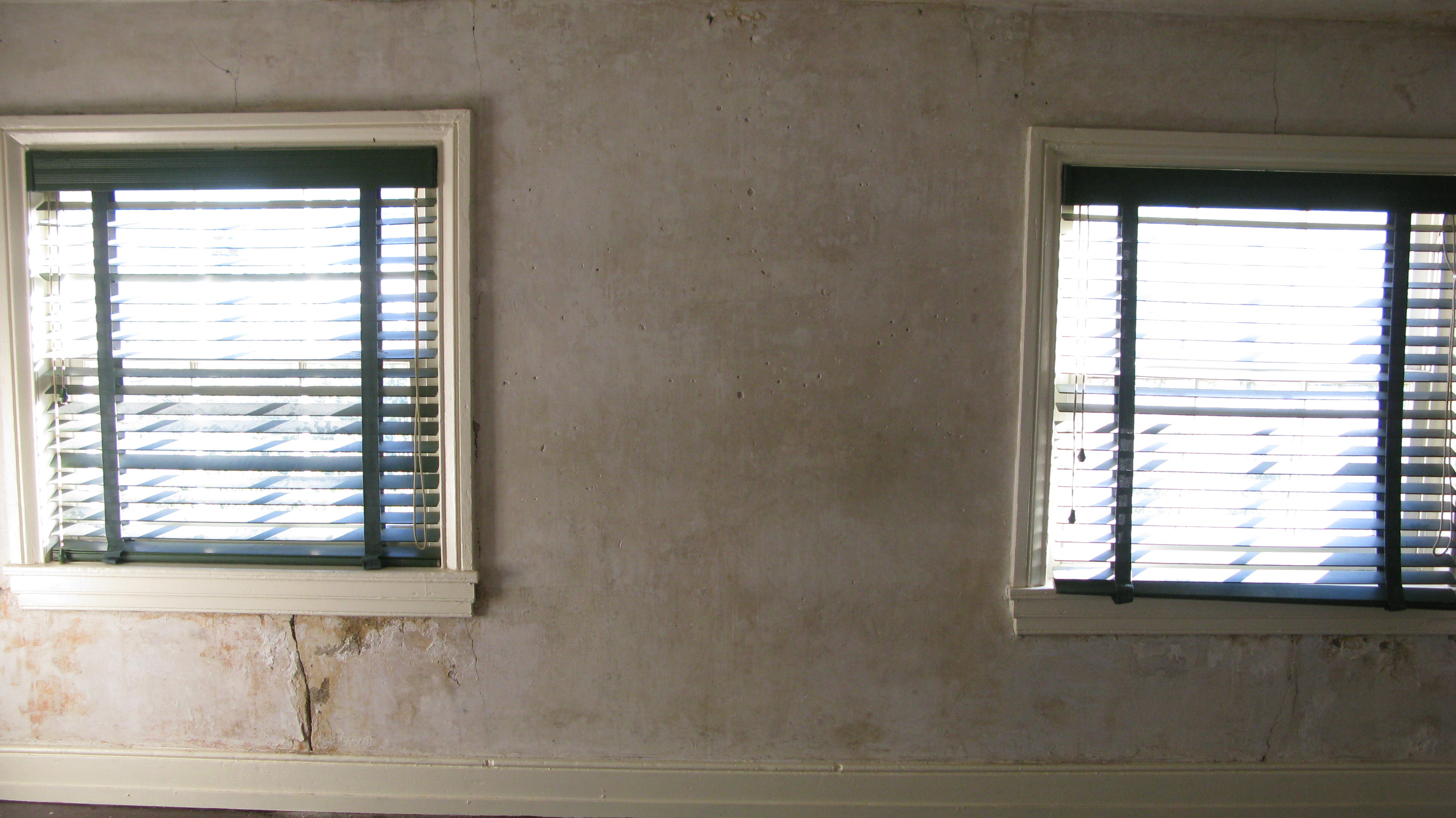
basement

A huge influence to writers around the world, especially of the short story, Poe never knew that the inventions of his stormy brain would reach such a wide audience, long after his death. Poe’s footprints are visible everywhere. As a Halloween and literature enthusiast, this is my personal tribute to his life and works. Even though he is typically associated with the macabre, he was a Southern gentleman who lived humbly, loved his wife dearly, and struggled hard to become the reknowned writer that he is today.
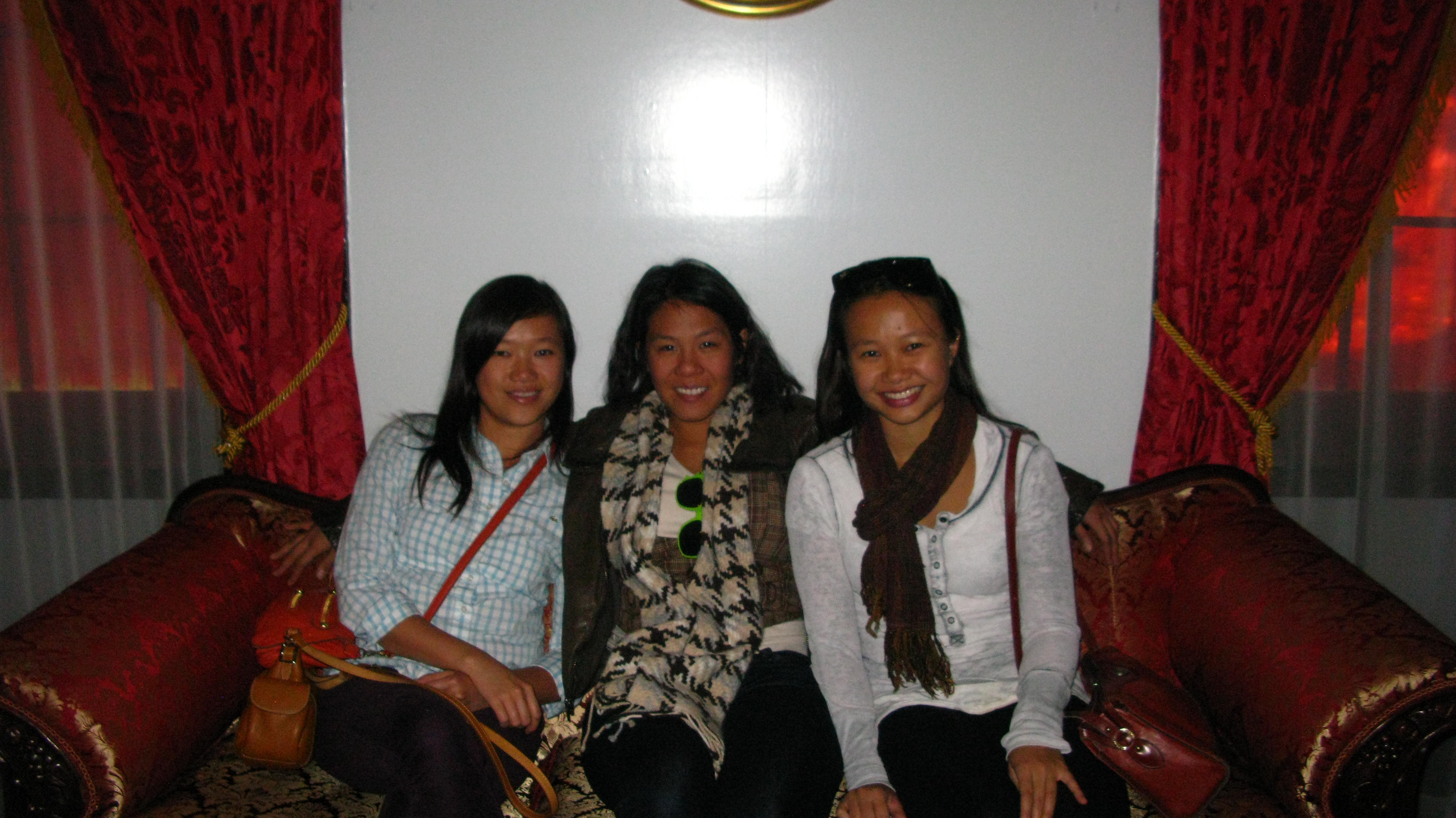
And that is us sitting in a drawing room decorated to Poe’s taste (lots of red and gold trim, portraits of pale women) and listening to “The Raven” while perusing through old copies of his works. Check out an audio recording of Anne Waldman reading the “The Raven” over at Poets.org. Also check out Aimee Nezhukumatathil’s essay on Linda Pastan’s poem, “The Deathwatch Beetle,” where she discusses how the ticking sounds in Poe’s “The Tell-tale Heart” echoes the theme of mortality throughout the eerie poem.

(Weeping Angel photo by Tony Case, from the New Orleans Cemetery and from IWTV)

(Tell-Tale Heart photo by Mick Rhodes)

Visiting Roots


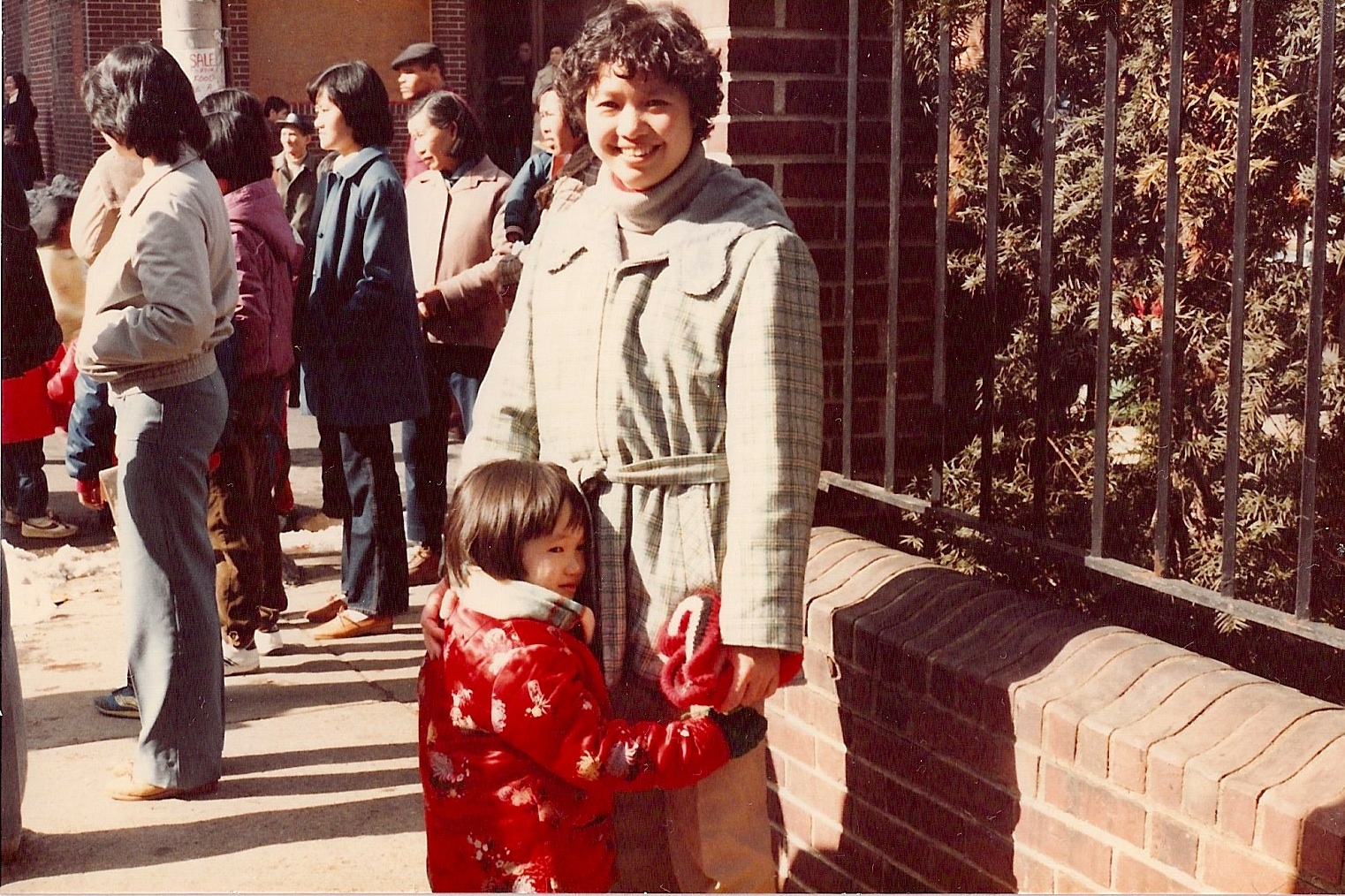
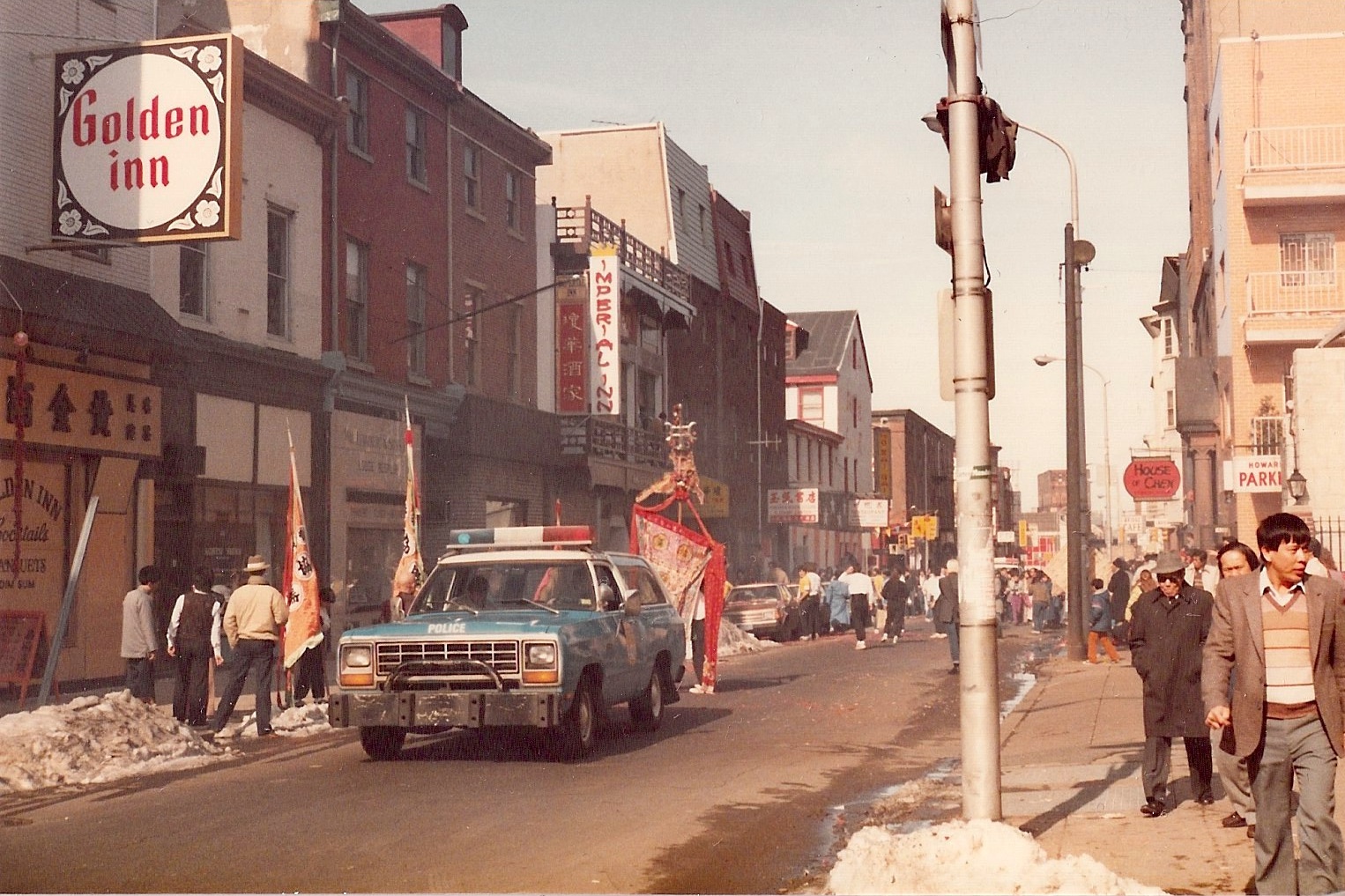
(Photos from old family albums dating back to 1980s)

The first time I’d been back to Philly Chinatown in an entire year was on a Saturday about a month ago to have tea with a friend. In the car with my father bumping slowly down 10th Street to avoid sudden street-crossers, I peer out the open window at the sights that have always been quite normal for me: Chinese grandmothers aggressively doing their weekend shopping, the tofu woman selling an unsettling combination of bras, panties, and Asian sweets, the backside of my mother as she happily disappears into a pastry store to buy discounted buns.

My parents, my sister, and I used to live in an old apartment in Chinatown up until I was five, when we moved into a bigger house up in the Northeast. But even after that, I continued going to Holy Redeemer School at the corner of 10th and Vine. So Chinatown has been the backdrop for most of my childhood life, a place that, even with its rank fishy smell and its tendency to be a bit insular, has always been a little homecoming oasis in the middle of the city.

When I’m back in my old neighborhood, I always notice the changes, or at least the relatively new — the old-fashioned Chinese-style street lights the city has installed, posh bubble tea places I have never seen, a new ramen noodle bar that makes it way onto the must-try list. And after making a mental note of it, I begin to try to remember what those places used to be before now. Probably a different noodle bar, or one of the dozens of restaurants in Chinatown that have made their way into the rise and fall of businesses here.

But the most interesting places are the ones that haven’t changed in years, even decades. Like that place called Tuck Hing on the corner of 10th and Spring where every day after school, I’d go in to buy packets of Sprees or Sweet Tarts or Cheese Curls for 25 cents, and the old lady would ring me up with an abacus. It was the same place my dad would send me off with 60 cents to buy the daily paper, or where my mom went to buy boxes of freshly made, freshly cut rice noodles. Miraculously, it’s still in business and still selling the same stuff, with the same refrigerator showcasing frozen popsicles.

And the stores that smell of ointment or medicinal herbs where you can buy random knick-knacks, stationary, bamboo plants, or the old place where they’d spoon delicious tofu curd from a huge metal vat and sell it to you in a plastic container for a dollar. I even briefly pass by my old school, admiring the refurbished parish house and glimpsing the old swings we used to wait in line for during recess, in which, if you went high enough, you could almost touch your toes to the old gingko tree.

I get dropped off at the Wawa and I slowly make my way down Arch towards the Chinatown gates. It’s the famed postcard intersection. This is probably what the neighborhood looked like even when we used to live here, perhaps just not as gritty; our old photographs always show this gateway amidst the clamor of New Year’s celebrations and the lettuce-eating lions, me touting balloons and a devilish grin, people in traditional dress holding up signs with Chinese characters.

On this Saturday, the old traditional clothing has gone and the streets are full of families who speak English and young people like me who are meeting their friends for tea. I am early, so I stop by K. C.’s Pastries to grab my mandatory morning coffee, iced for the warm, late-summer weather. Before the illuminated glass display of cakes, buns, and tarts, I order my coffee in English. I realize I have never ordered in English before; it’s always usually in Cantonese. I am lazy getting back into my old skin, suddenly abashed with my old tongue. But the pastry lady, probably unlike ten years ago, understands perfectly, and I even request some napkins.

Walking down the sunlit side of Race Street, I pass by the old laundromat, that place which used to be like a magic portal (and probably still is) to the other side where the courtyard houses lie, and the grocery store, the site of those longed-for belly button cookies mom used to buy me. Ocean Harbor, one of the most popular weekend tea places in Chinatown, is already warming to the morning crowd, and as I step inside, the manager unceremoniously charges over with his usual cut-to-the-chase line: “How many?”

At tea, everything is just as it always was. We sip on hot chrysanthemum tea, watch as the women push carts by full of greasy dim sum, dumplings, noodle dishes, fried squid. Families are gathered, a line sprouts out the door as 11 o’clock nears, and the women keep pushing their steaming carts by our table, inquiring with somber faces if we want something from their cart, meandering away to the other tables. The conversation and sound of chopsticks hitting the plates rise to a comfortable din within the restaurant, and my friends and I relish our peaceful round-table camaraderie amidst the hearty raucous that envelops Chinatown on the weekend.

“From Madrid, to heaven”

Where’ve you been? Tell me, where’ve you been?
I’ve looked all over the city for you
And couldn’t find you
Today I buried the kisses I gave
Now I don’t have to wait anymore,
Lost in the street,
Lost in the street

– Taxi, “Perdido en la Calle”

I love this song and this video because of the girl who is moving forward through the streets of Madrid while everyone else is backtracking through time. It makes me think of my time in Madrid, and how much of my four years there has involved a similar de-synchronization of my life from that of family and friends at home. I felt like I was leaving not only those people behind while they went about with their lives, but also my early 20’s, the other me.

This, of course, was not the case my first year abroad. I loved everything about Madrid when I first arrived, the people, the parties, the coffee, the nightlife, my roommates, my classmates. And above all, the feeling that I was not at home, I was in this crazy place where people took siestas regularly and I had to fend for myself in the mire of English-teaching, Spanish-learning, Spanish bureaucracy, and Spanish boys. And I loved every minute of it.

But after awhile, I remember it all got a little tiring. I began to miss home a bit, particularly New York City. I would miss the big skyscrapers and the way they made me feel anonymous and small; I missed college, reminisced about living in the city and the adventures I had. I continually compared Madrid to New York and was sometimes annoyed by its shortcomings — like why did people stare so much? Why is nothing open 24 hours? Why are there no cute hipster coffee shops where I can vege on my laptop all day? Why do people party so much?

Yep, when I arrived I couldn’t get enough of going out, and by spring I was already tired of it all. Things were becoming so familiar, the avenues, the restaurants, my classes. I began to wish it were a more beautiful city, or perhaps grittier, with more places to hide and burrow myself into while I was missing home. I found it difficult to have moments like the ones in college, sitting on some stoop in the Lower East Side, feeling strange and poetic and on the verge of vomiting a poem. In New York, things were never predictable and people were never complacent.

I think this is one of those cliche cases of not appreciating things until you lose them. This spring, my friend Allison visited me, and I took her to all the usual places in Madrid — Retiro Park, the Palace, Plaza Mayor, etc. I had never really admired the city aesthetically, but her amazement with Retiro and everything else I showed her made me think again. Yes, I had this gorgeous park a bus-ride away, these old beautiful buildings all over, and so much history that I just simply took for granted. And then there’s the neighborhoods that are such treasure troves of la vida madrileña— Malasaña, Bilbao, Lavapiés, La Latina.

On our evening walk through the Palace gardens, she asked me, “Why would you want to leave this?” And I had second thoughts again. Yes, why would I want to leave? I was starting to feel pangs of regret while we strolled under the Palace lights. I thought about all the walks I took through Sol, the shopping trips on Gran Via, the hours on the Metro, the beautiful springs and the fun nights. And I had to agree with her. I had never admired Madrid the way I did these last couple of months. I began to sincerely say to people that I loved Madrid, that it was an amazing city.

I had built my life from the ground up these last four years there, made great friends, maintained the longest-lasting relationship and adventure I ever had, and grew up, a lot.  I wish my college self had known what I learned in Madrid. In Madrid, I became more outspoken because I was able to navigate life in another language. I figured out the kinds of people I wanted to keep around me, and was okay with not pleasing everyone. I learned how to live with who I loved.  And I was able to develop those things I loved to do — read, write, travel, be with good people. From my old roommate Judy, from Janet, from Cynthia, John, and Isa, from many people, and of course from Javi, I learned these things, and I couldn’t be happier for the times spent with them.

Being in your 20’s and in New York — it always constitutes a lost, romantic condition. I think my disillusionment with Madrid was the lack of this. Days were always sunny, every bar was always full of people, feelings didn’t seem as complex. And perhaps that is why I couldn’t find that in Madrid, because I was never lost there. I always knew, in the back of my mind, what I wanted; that was also a part of the growing up. And I knew, when I returned to Madrid last Christmas from Philly, that it was time to go home.

I was excited when I made the decision. I thought of all the people I’d be seeing at home, all the things I could do once I got there and began living life there again. All the pho I would eat. But when the time came for me to stuff two huge suitcases with all the clothes, shoes, books, and keepsakes I’d collected in four years, I couldn’t stop bawling my eyes out. It was, of course, an impossible task, so I’ve left half of my life there waiting. Madrid will always be my other home, and I’m certain that I’ll return one day.

When it all started, I was 22 and alone, dragging one large suitcase down Paseo de Extramedura, asking people in sloppy Spanish for number 146. And when I had to leave, I didn’t want to leave. But I knew I had to, so that I could reconnect with my other life on the other side of the big pond, and so I could grow up even more and do the things I want to do. It was always hard juggling these two sides that were completely different; it was draining and confusing and made me wish life were simpler. But I feel as if I’m on the right track now, and on the road to piecing them together.  Thanks for everything, Madrid. I love you.

De Madrid al cielo. From Madrid to heaven.