Turkey, I

Istanbul

City of intricate spice markets, weekend fishermen, countless street cats, dazzling mosques, Turkish tea, and… the Bosphorus.

1. The trolleys rumble through the curving streets of downtown, the automated woman’s voice announcing the next stop makes sounds that are unrecognizable. Turkish is one of those languages whose sounds I can’t even recall, whose rhythm and texture are undefinable. I manage to learn two phrases: Tesekkur ederum, thank you, and peynirli gozleme, cheese pancake.
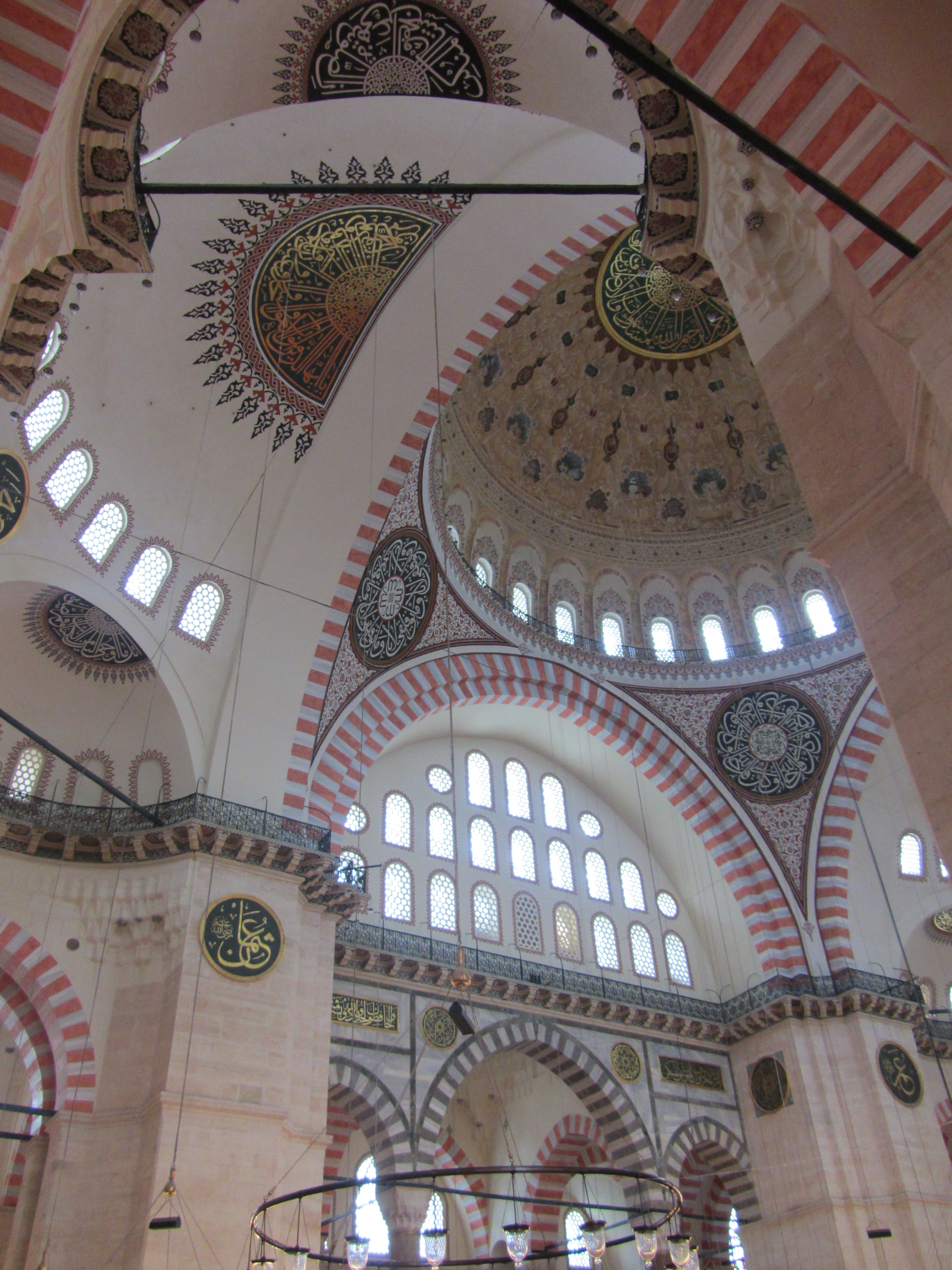
2. From mosque to mosque, the colors are inviting, the ceilings majestic and hung with large circles of low, tapered lights. Barefoot, I wrap a shawl around my head and step slowly through the doorways, pad with my feet on their long tradition of carpets beautiful enough for kings.
3. “Handmade” is a word that is thrown around by all the street salesmen in the markets and bazaars, even with merchandise that can’t possibly be handmade. They know it is a word that entices foreigners and that may get them to pay higher prices, inevitably bargaining them down to something that’s still much higher than the market price.  Silk pashminas, saffron, Turkish candies, tea, false designer handbags, soap, ceramics, vases, and always the carpets… The Grand Bazaar is an endless maze in a building that was once a medieval marketplace. The Spice Market offers a more authentic alternative to the westernized merchandise, with its open-air stands and products that the Turkish actually buy.

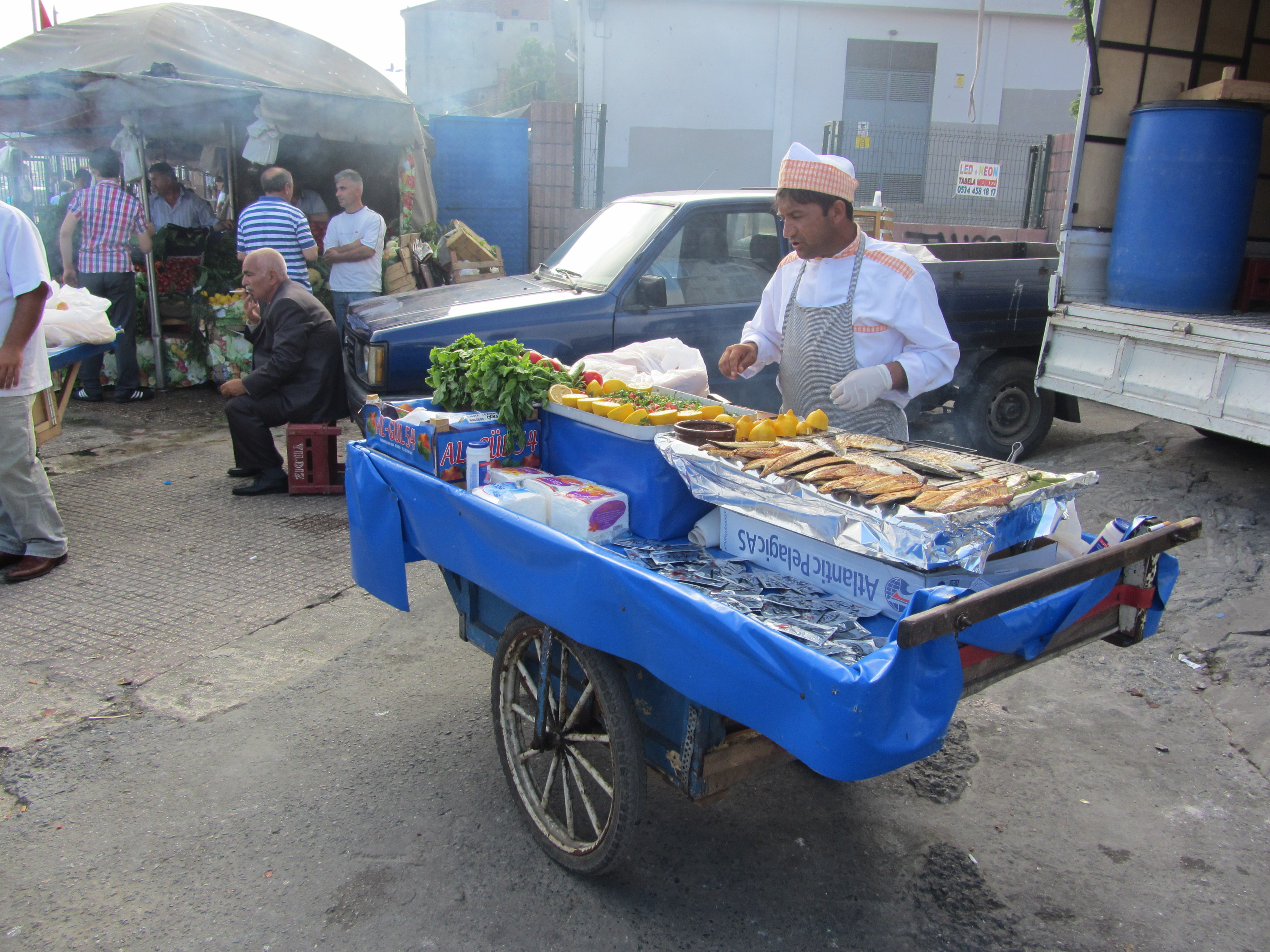
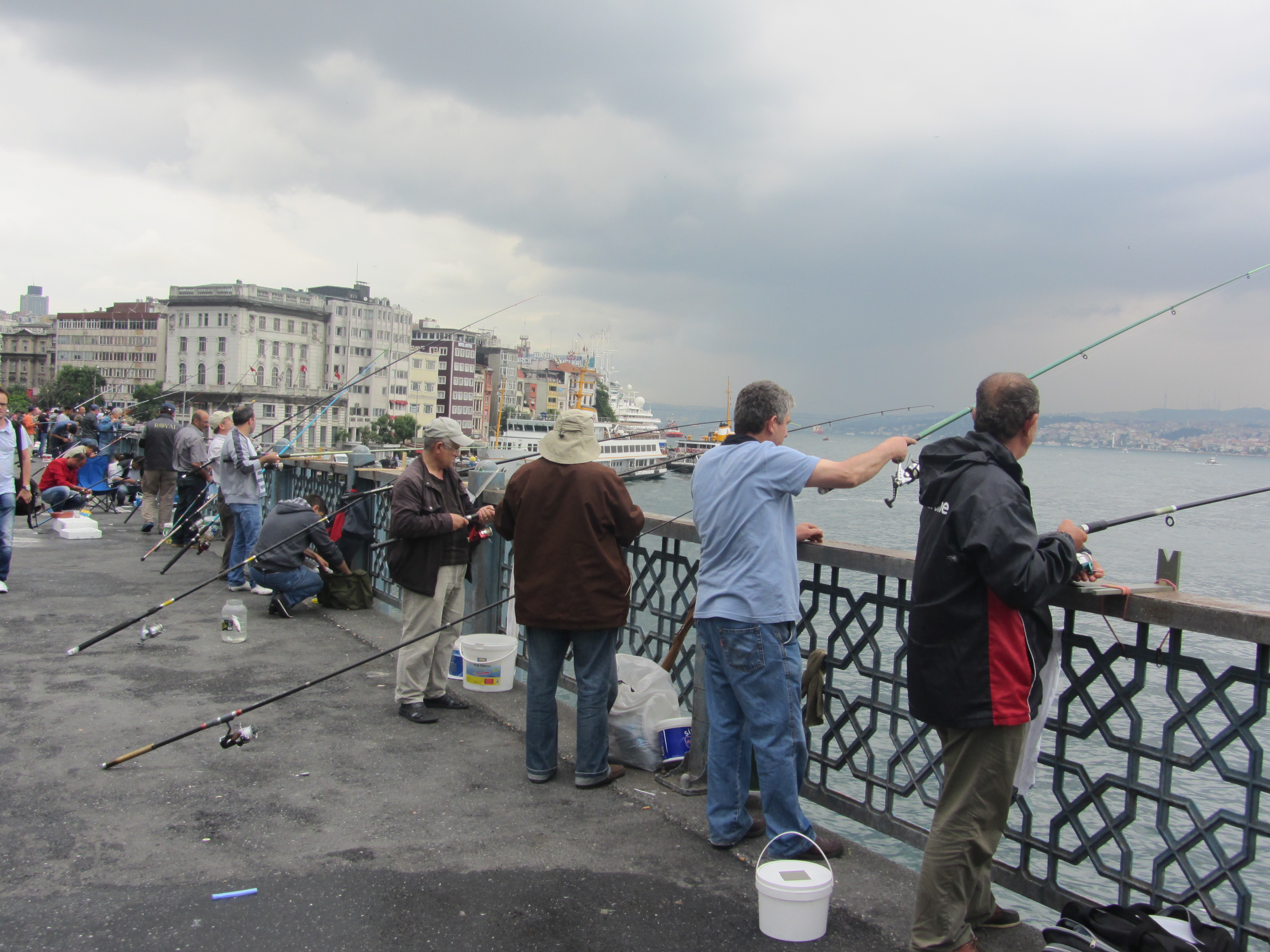
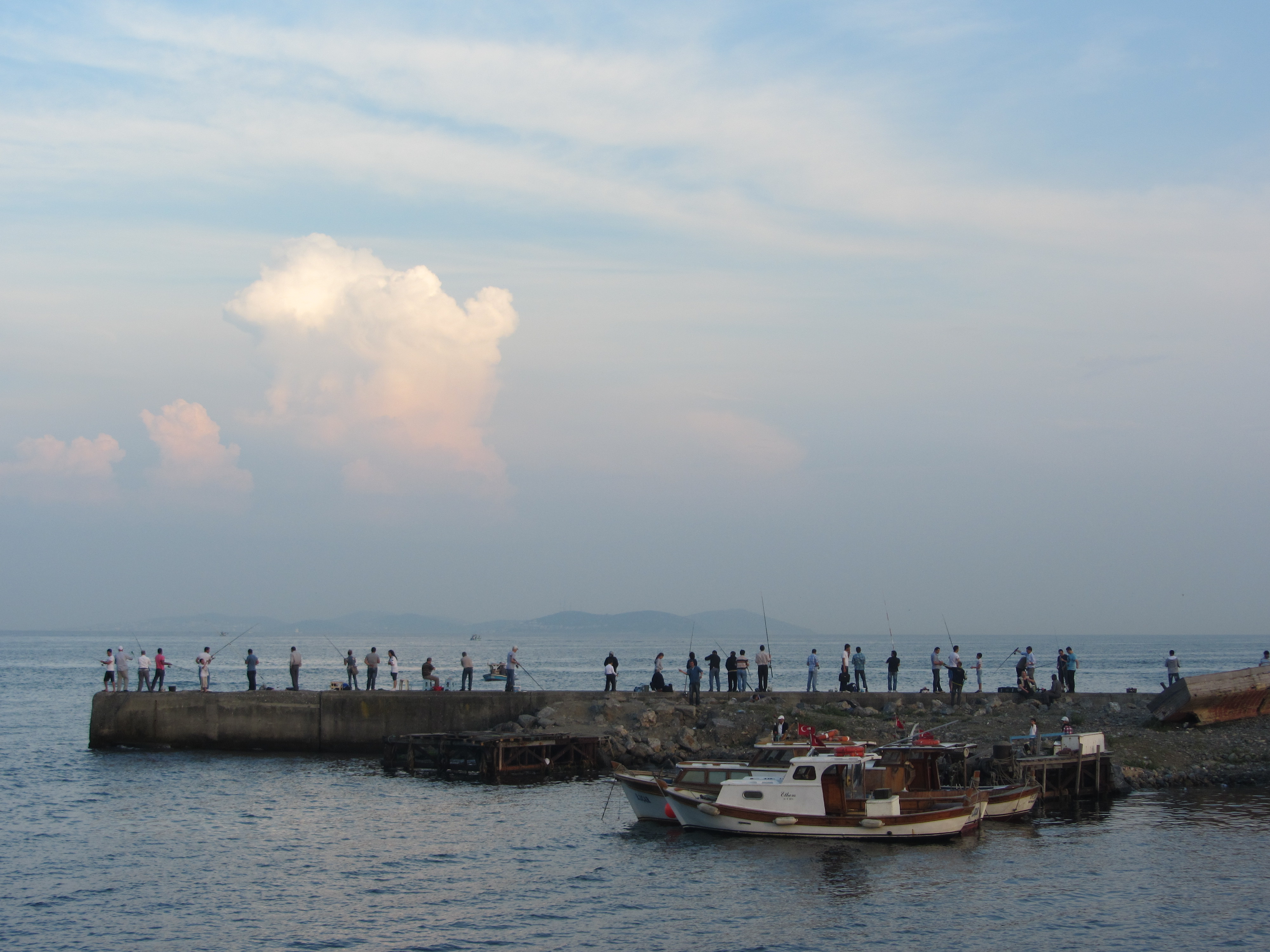
4. The bridge leading to the occidental side of the city is crowded with fisherman leaning over either side with their lines, their buckets of water and catches of the day. Cars and trolleys run in the middle of the bridge, and underneath, the entire length is filled with restaurants that grill fish and waiters that constantly invite passersby with “Yes, please, why not? Just take a seat here…”

5. A cruise on the Bosphorus strait reveals Istanbul as an endless city, a real city, with its sloping hills, majestic palaces and wooden houses that flank the river line. The skies change from rain-gray to sun that makes the water glimmer. The strait is so narrow on the map and so vast in real life, full of ferry traffic and merchant ships cruising between the Black Sea and the Sea of Marmara.

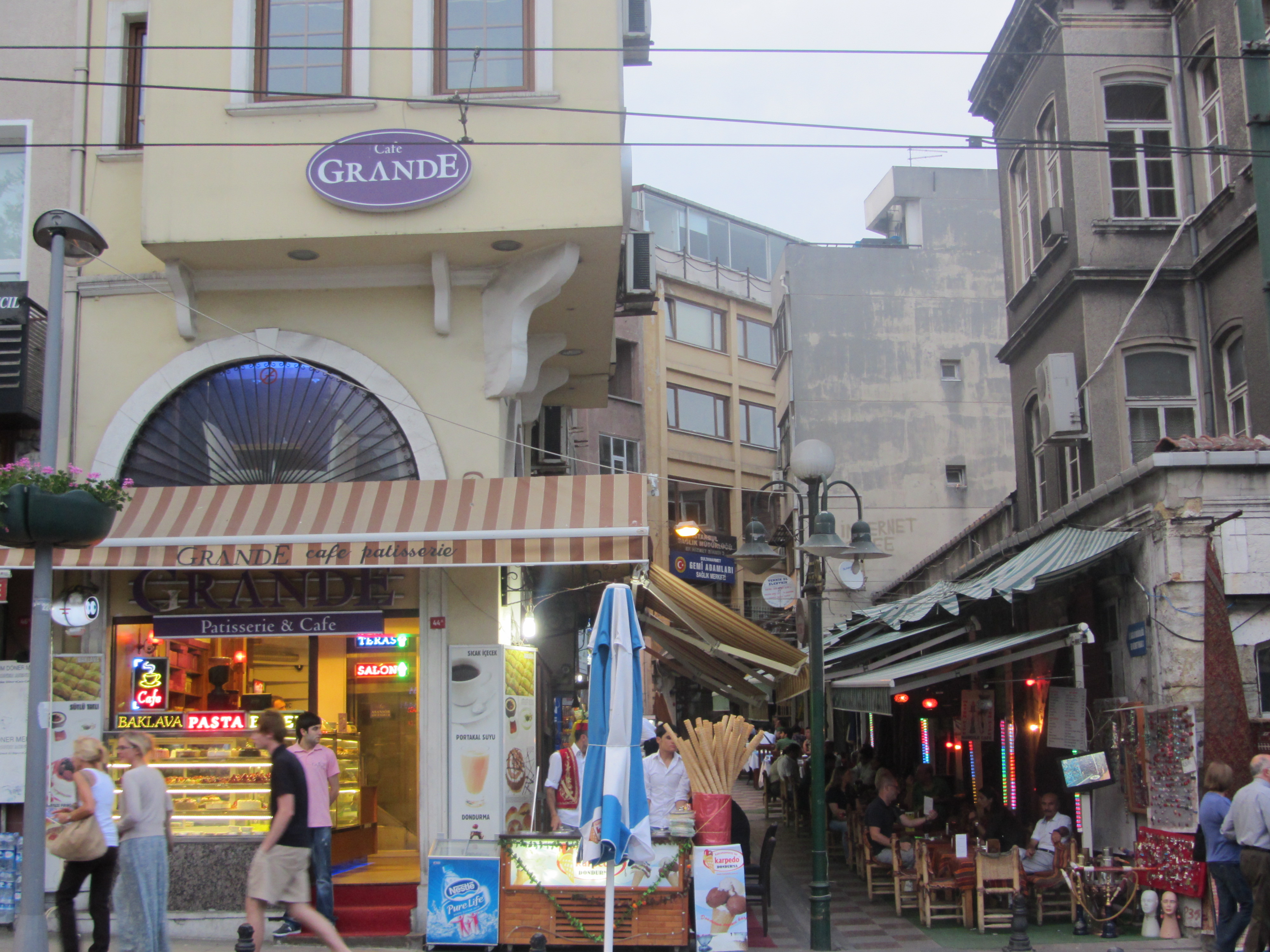
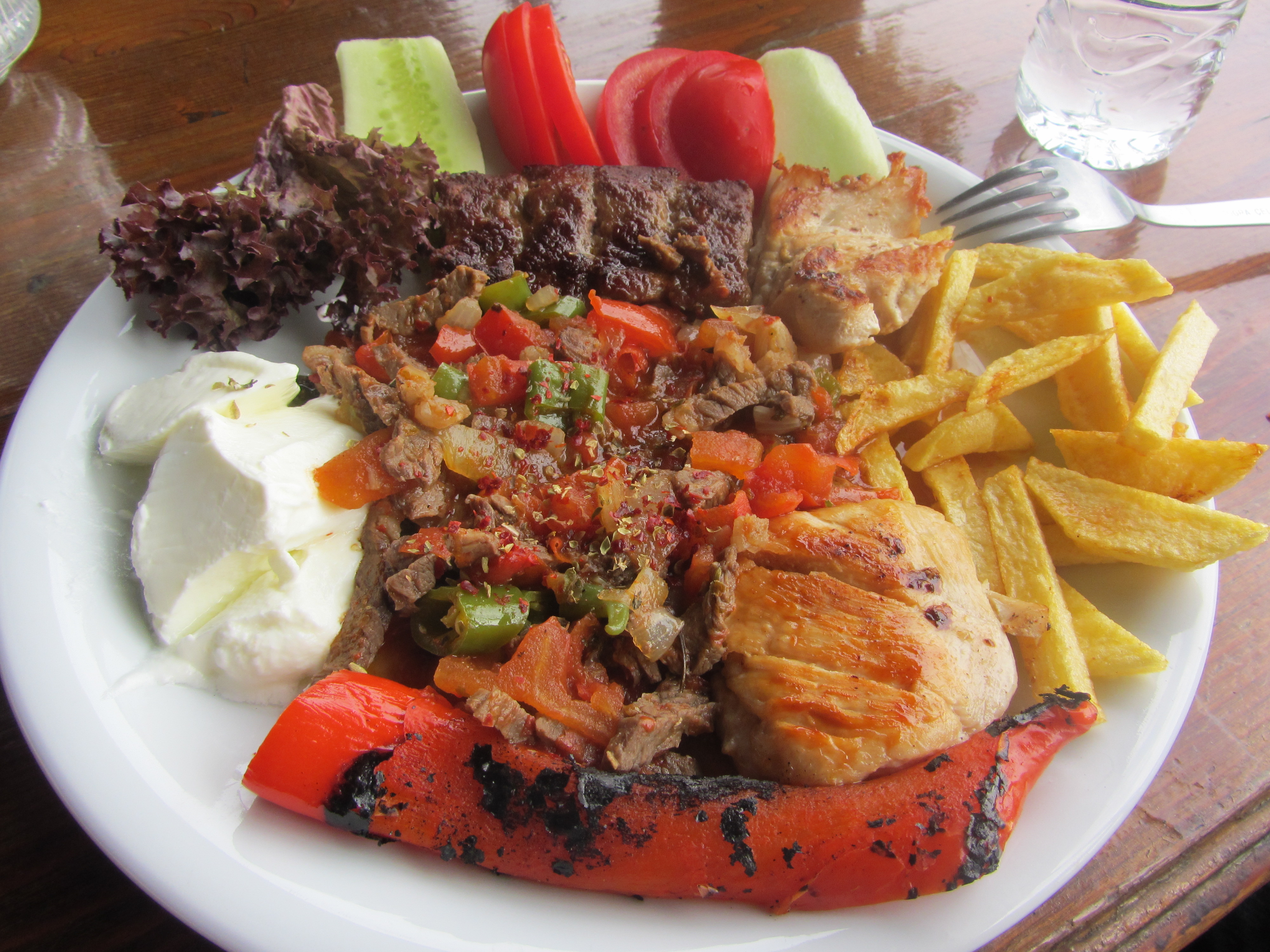
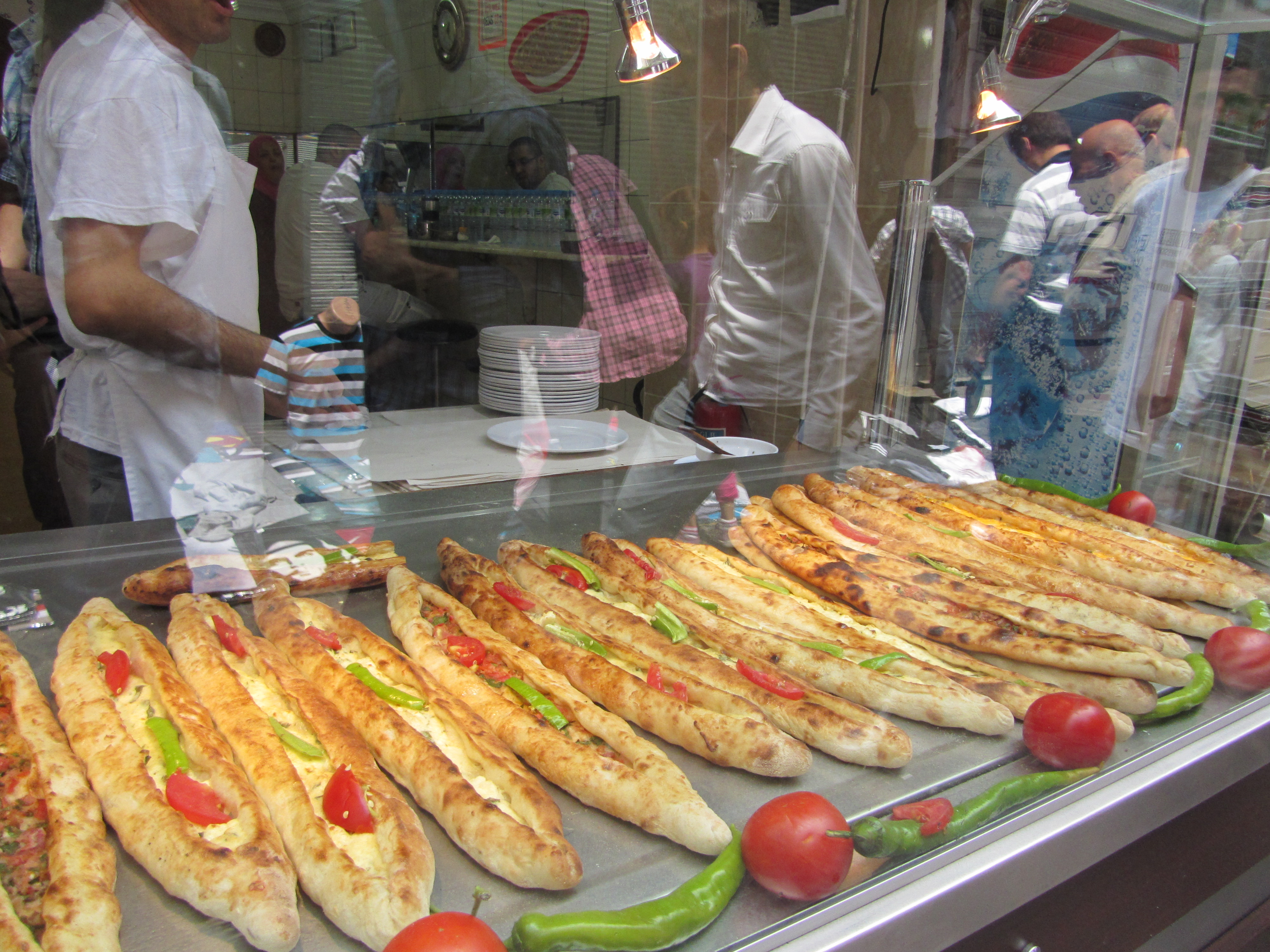
6. Turkish food is pretty delicious. We order a kebab dish at this place near our hotel with views of the sea, where the locals hang out and while the afternoon away with tea and games of backgammon. Hookah, Turkish tea, and sea view are relaxing combinations. The Turkish pizza that they sell in the street in the spice markets are very tasty, reminding me somewhat of scallion pancakes. By the river street carts grill freshly-caught fish and sell sandwiches for a euro. And everywhere they squeeze fresh fruit juice, oranges, apples, pineapples, pomegranate. Other delicious things: Turkish yogurt salad, Turkish delights (sweets with nut fillings), pancakes, potato salad.
7. We visited the Topkapi Palace, home of the sultans of the Ottoman Empire. Huge, formidable, with pretty gardens, like all palaces, but the most impressive part is the Harem, where a court of beautiful and intelligent women lived as the sultan’s lovers, advisors, and possible future queens. Endless marble floors and columns, minutely crafted stained-glass windows, the sultan’s domed chamber.  These places are always so hard to imagine in their historic setting, in the time when they weren’t a museum invaded by tourists from everywhere, when they had a use as well as beauty.

8. One of the most pleasant walks of my life: all along the riverside from the bridgepoint back to our hotel in the southern end of the city. Locals enjoy their Sunday with their families, fishing, grilling food, sitting in lawn chairs drinking tea and smoking. The Bosphorus stretches out to the other side of the city, open and inviting, the pride of Istanbul. The silhouettes of young men are seen lined up on piers, who stand with their lines and buckets, waiting for a catch. We buy slices of watermelon and sit on a bench to take in everything.
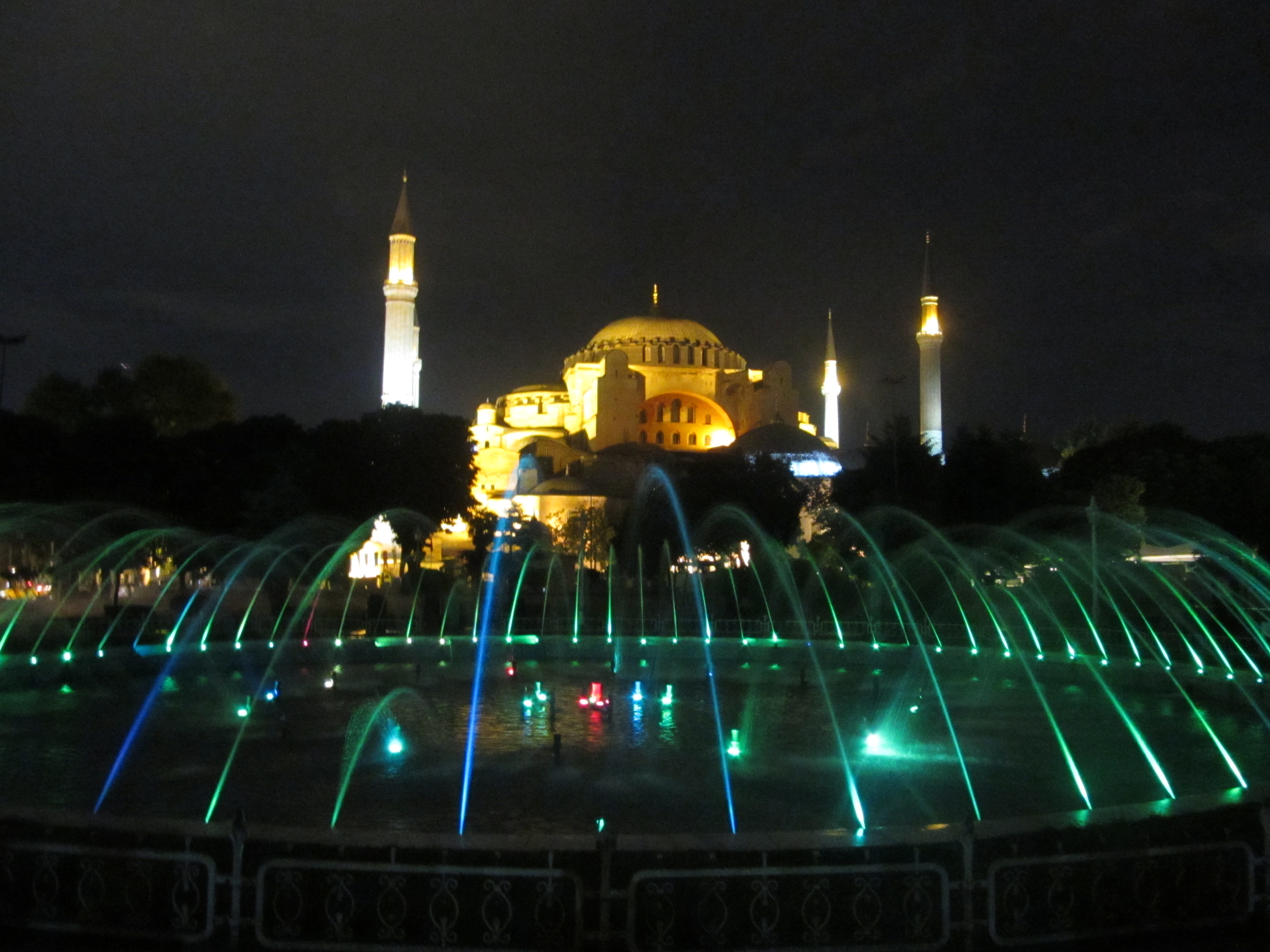
9. The Hagia Sophia was once the cathedral of Constantinople, later converted into a mosque. Its looming structure stands in the heart of Istanbul, surrounded by parks and fountains. Within, faded Byzantine icons share façades with Islamic inscriptions. The ceilings and walls are decorated with tiles and mosaics, the floors and columns made of marble.  The Christians and Muslims prayed, centuries apart, to different gods, at the same altar.

10. We cross the bridge to the occidental side of the city, saying “We’ve reached Asia.” Its streets are much hillier, and the main feature is the Galata Tower built in 1348 for fortification purposes. We go up the tower in the elevator and are met with a panoramic view of Istanbul that gives slight vertigo. From there we can point out the Blue Mosque, the Hagia Sophia, and the Galata Bridge which led us to this side.

July 4th and Bad Poetry, etc.

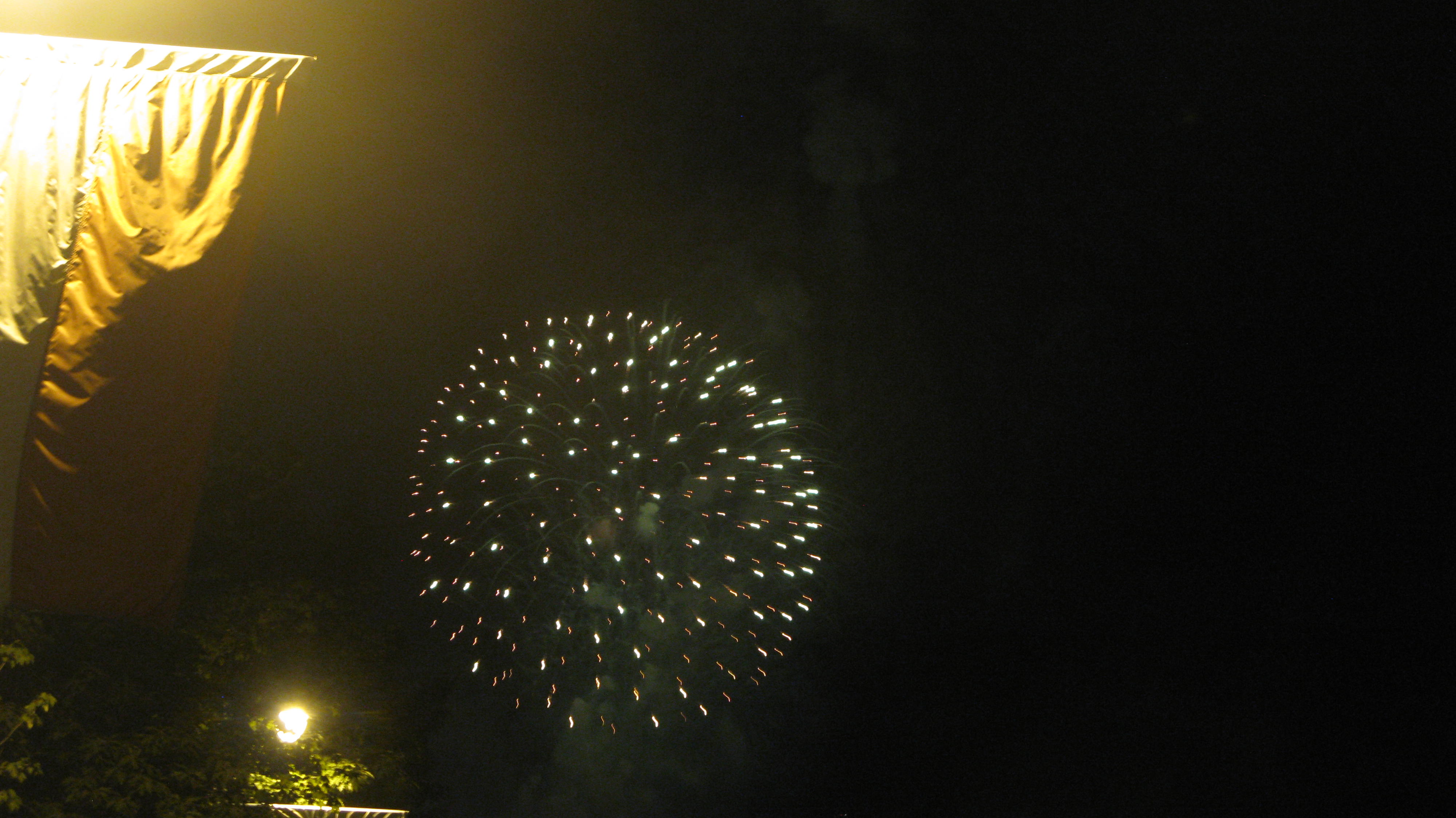
My 39th attempt to get a good shot of the fireworks...with the flag of Morocco in the background.

Got my fill of a traditional American 4th of July, Philly-style with a delicious barbecue, courtesy of my cousin, and a surprise appearance by Boyz II Men on the parkway, who performed their all-time classics.

I hadn’t seen the fireworks there in years, so it was nice getting to see them once again. My favorite kinds are the ones that flower from the deep into ginormous dandelions and that disappear as pinpoints of blue or red fireflies.  Every time I see those I get the same reaction in my stomach as I did when I was a toddler, perched on my dad’s shoulders in the lot across our apartment to watch the fireworks. It always felt like they were coming at me from the darkness.  I used to flinch, even though I admired them.

Speaking of younger days, I found a poem that I wrote when I was about 13 or 14 that surprisingly won the Walt Whitman young poets’ award. I never gave it a name, so on the certificate it says, “1st place for ‘Untitled.'”  In retrospect I really should’ve been less lazy and just named it, at least a straighforward name like “Fireworks:”

fireworks
over the lake
red       and      green
and
purple
shooting
stars
flowering into
cinderella’s ball gown –
shimmering connect-the-dots
and vibrant  e x p l o s i o n s
held her terrified
enraptured on a
father’s shoulder

oh for the world to be as
endless
as this night in the old
parking lot
as jubilant as
these multihued   s t a r s
as safe as these strong shoulders

to be forever young
with a mind devouring beauty
and
possibility with
insatiable hunger
to be   her   once again
this tiny 5-year-old who saw
colors and wept from joy
and wondered at
the       miracles    of the sky
who knew nothing but to be
in awe    to be
safe        to be
Loved.

Get a load of those line breaks!  I guess what was Cinderella’s ball gown then is a “ginormous dandelion” now. Metaphors are just like people, they change and become a bit more jaded. You can also totally tell I was going through my vampire phase with the line that goes “to be forever young…with insatiable hunger.” I guess it could be Walt Whitman-esque, with its ramblingness, patriotism, and profuse use of adjectives. Other than that, I’m glad my poetry has somewhat improved since then.

Hoagies, free food, and old roommates

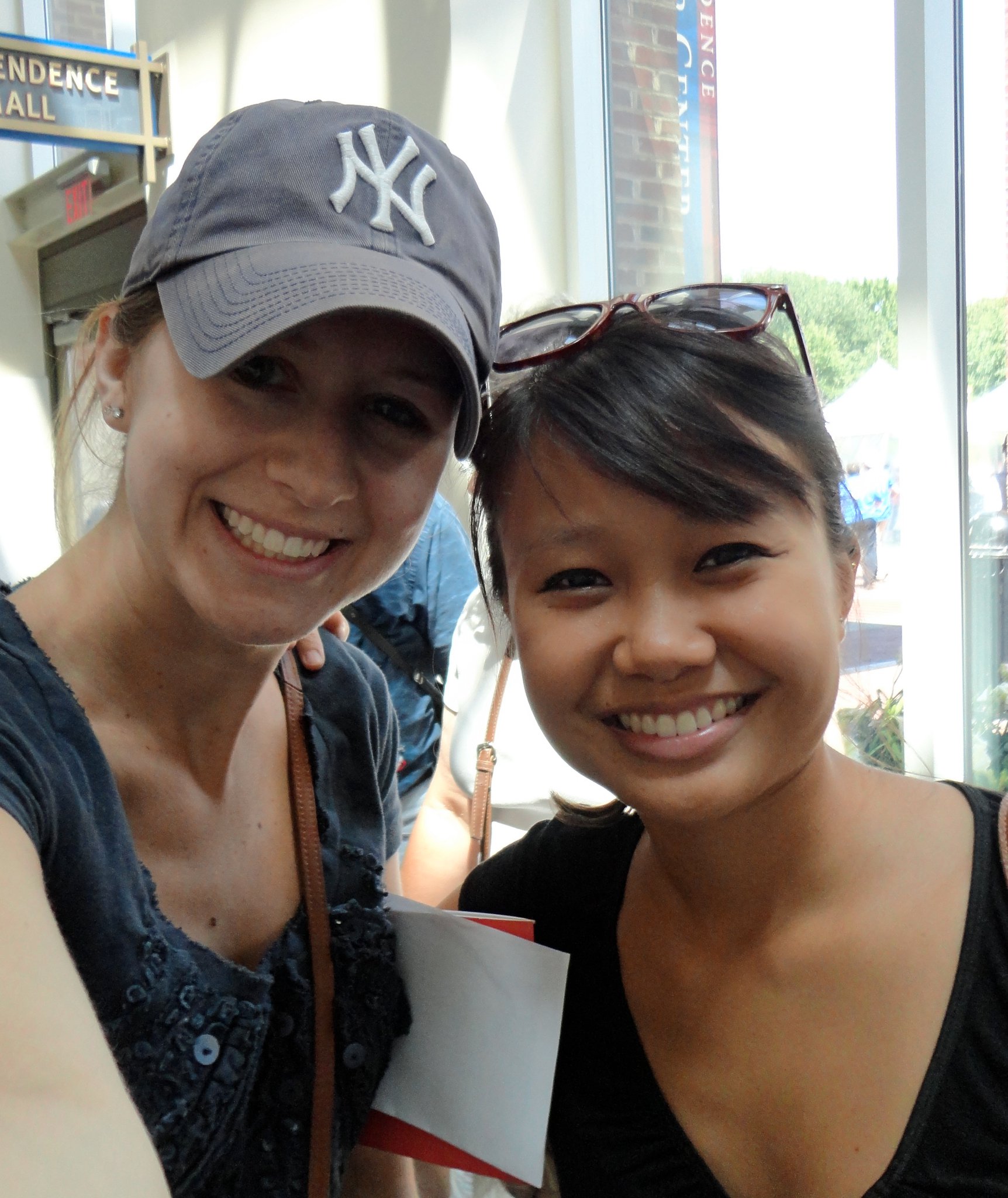
One of the best things about coming home is going to festivals where you get free food. What a better way to show my patriotism than by standing in line with a free Wawa hat in front of Independence Hall, waiting to get a free hoagie?  And iced tea? And bag of chips? I’ved missed Wawa, and not necessarily hoagies, but rather cheesesteaks and breakfast sandwiches.  The list of greasy foods can go on.

Another feature of homecoming during the summers is my yearly date with Lauren, my first college roommate, who is even more of an enthusiast of free food, and who gives me the annual update on all of our old classmates – weddings, babies, drama, romances, repeating histories.  Seven years is a lot when I think about it; even a year is difficult to re-cap within the time it takes to have coffee or dessert.

When we first moved into the 7th floor of Johnson, we immediately bunked our beds, me on the top, her on the bottom.  That made room for the ugly chair, which promptly arrived and became the site of book reading, naps, hallway wars and congregations, etc. When she first saw it, fresh from a second-hand South Street store, she gave it one look and said, “We might need a cover for that.”  Though we never did cover it up, hence the name.

She kept her violin under the bed.  I’d always envied musicians with such portable, easy-to-hide instruments.  Mine was always inconsistent and monstrously lurking  in basement glass cubicles. We printed out monthly practice charts and taped them to the back of our door to track our practicing habits, which we always claimed were bad.

On quiet, war-free nights, we wrote  in our journals silently under the lamplight.  We  weren’t the kind of roommates who chatted incessantly til dawn, but rather we shared silence and music well. We would even message each other on the internet while sitting inches away. I’m sure every roommate has done that. When we did talk, I liked listening to her because, as an open and reasonable person, she always had, and still always has, some outlandish or tragic or funny story to tell.

We shared our fondness for e.e. cummings.

I still remember what the door sounded like opening and its tact, the turn of the key and knob.  If you weren’t careful it would slam, as it usually did in the neighboring boys’ rooms.  She was an extremely light sleeper.

We went to concerts together.  Sometimes we went to parties together.  Once we came home and, laughing uncontrollably, took photos of ourselves smiling drunkenly together in the dark, the Christmas lights blinking in the background.  In our room it was eternally Christmas. And spring was always a perhaps hand.