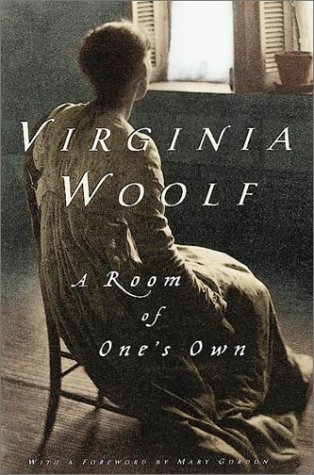
“Young women, I would say, and please attend, for the peroration is beginning, you are, in my opinion, disgracefully ignorant. You have never made a discovery of any sort of importance. You have never shaken an empire or led an army into battle. The plays of Shakespeare are not by you, and you have never introduced a barbarous race to the blessings of civilization. What is your excuse? It is all very well for you to say, pointing to the streets and squares and forests of the globe swarming with black and white and coffee-coloured inhabitants, all busily engaged in traffic and enterprise and love-making, we have had other work on our hands. Without our doing, those seas would be unsailed and those fertile lands a desert. We have borne and bred and washed and taught, perhaps to the age of six or seven years, the one thousand six hundred and twenty-three million human beings who are, according to statistics, at present in existence, and that, allowing that some had help, takes time.”
Even during my years as an English major I never had the chance to read this book-long essay, compiled from lectures Woolf had given at women’s colleges in Cambridge in 1928. As an essayist, Woolf is astounding in the depth and breadth she uncovers on the subject of women and fiction writing, not only in the logic, forcefulness, and lyrical qualities of her writing, but also in the way she patiently and meticulously follows her strand of argument, like peeling an onion to reach the core answer to the question she poses: why have women, throughout the centuries, not been able to produce a significant body of literature as men have?
Her answer to that question is now renowned and regarded as a classic feminist work: the theory that a woman must have money and a room of her own in order to write fiction. With this argument, she directly relates the ability to produce significant literature with material status and an independent space in which to write. Women haven’t been able to write the plays of Shakespeare or the poetry of Byron because of their poverty, their economic dependence, and their state of being tied down to household labors. The structure of Woolf’s essay leads the reader from the very visual space of the garden paths of the University, where a Beadle deters her from the men-only turf, indoors to the shelves of the library, onto the pages and lines of books which she takes from the shelf to investigate, and into her mind, where her argument is imagined and concocted in the process of reading and pondering.
The visual component lends an element of concreteness and tangibility to the essay: we can see the University campus and the inside of the library, we can feel the weight of the books she takes down and see the yellowness of their pages, we can listen to her thoughts as she analyzes lines from different authors and as she forms her conclusions. Woolf does it all in such a scientific, rational, and investigative manner, holding true to her claim that writing must be stripped of all bias in order for it to be complete, in order for it to truly reflect the nature of the writer. She never assumes anything from the start, but rather walks the reader through her inquisitive thought processes. In this, the essay seems to depart from traditionally “masculine” writing, where the argument is usually presented up front as unassailable truth and where the ego of the writer usually comes through each line. The element of imagination is also important and effective: Woolf creates for us Judith, Shakespeare’s sister, who had a talent for writing that equaled the Bard’s and who attempted to make a life with her plays, but ended up committing suicide. Who knows, Woolf may not be too far from the truth.
I thought it was very interesting the idea that Woolf proposes about emotional burdens and writing; that the true nature of a person cannot shine through his or her writing if there is anger, bias, or repressed feelings, that a literature cannot be whole if it is written to address personal or social grievances. One has to be free of any kind of shackle in order to produce a work that is cohesive and true to itself. Woolf’s argument seems to hold true for the great literature of her time; it was certainly a product of privilege, leisure time, and economic stability. But I wonder if the standard of what we (or rather, the male-dominated world of readers during the rise of the novel) have canonized as great literature is set by the male model of writing, and if everything else has been set against that example. I also wonder if Woolf’s argument would still hold true today; obviously, fiction has evolved and the novel has found new structures and ways of being realized, but nowadays, is it still necessary for someone to have independent space and economic and emotional stability in order to produce a work considered timeless? I think about Nobel Prize Winner Gao XingJian, whose novels and plays were written in exile because of persecution from the Chinese government, and whose novel Soul Mountain was produced after he was misdiagnosed with lung cancer. To what extent does an emotional burden affect a writer’s need to write and how he goes about crafting a novel?
This also brings up the difference between a novel, a poem, a letter, and a biography. I’d say that the latter three are born of some kind of necessity. Women didn’t produce literature a century ago, but they did incessantly write letters in response to the need to correspond with loved ones, and biographies were written even by those who didn’t come from a privileged class. Slaves like Frederick Douglass and Phillis Wheatley wrote elegant, powerful biographies recounting the injustices which they and other slaves suffered. Epistles are born from the need to communicate, biographies from the need to tell one’s story, and poetry… I guess poetry is a whole other animal in itself. It arises from some other, obscurer, deeper necessity. I think about Emily Dickinson and how her affliction was very much the source of her dark and fascinating poems.
So where does the novel come in to all this? How come women could write letters but not novels? Is a good novel more of a challenge to write than poetry or a biography, and therefore needs more time, solitude, and stability to be produced? Woolf’s essay left me with these questions and many more, and that is why I found it such a fascinating and thought-provoking read. I don’t know if her ideas would still apply today, but I’d love to hear others’ thoughts on that.


 mabel lee