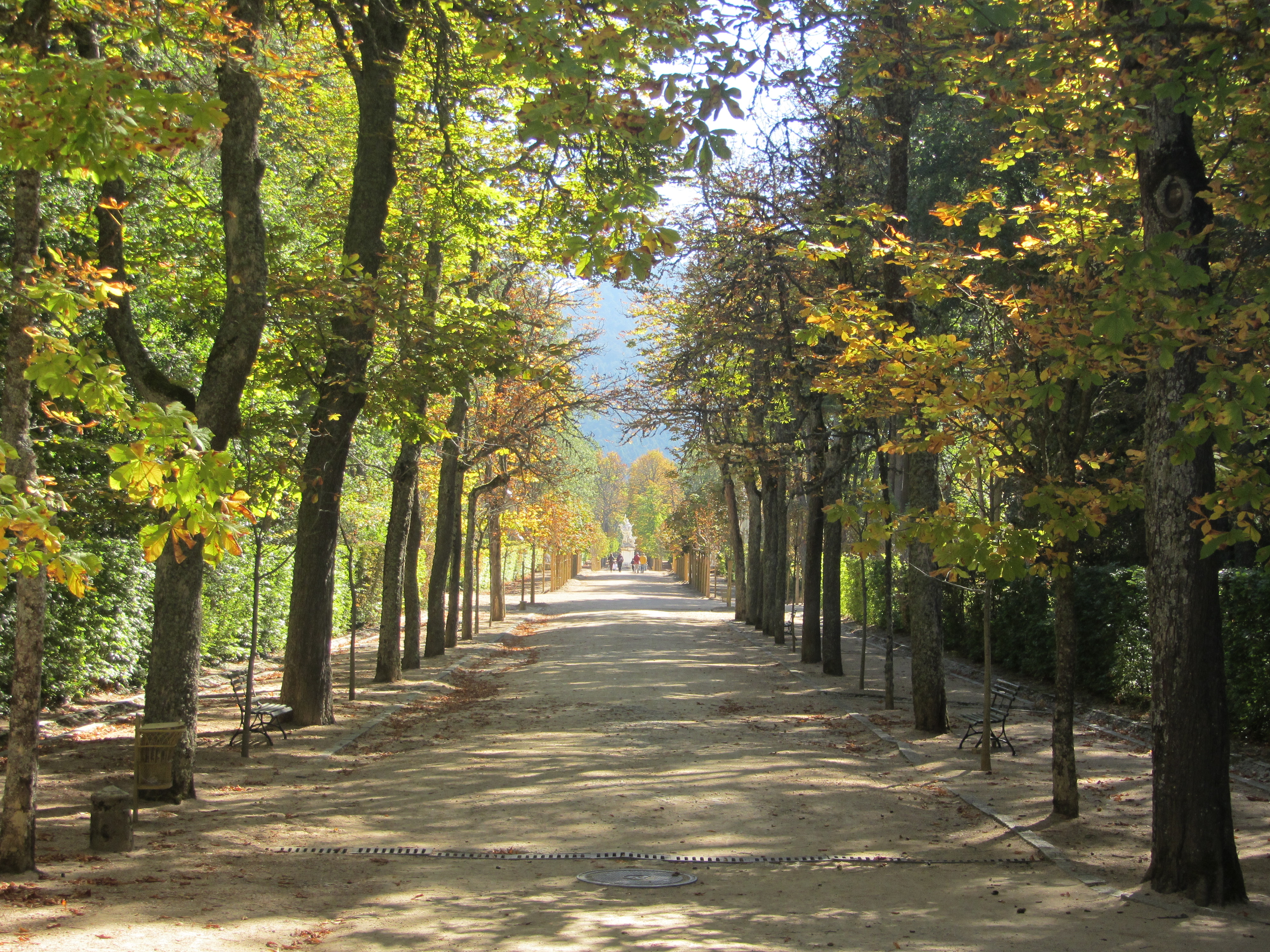
Autumn Has Arrived at La Granja, Segovia…

Look at that beauty. I had never been so excited to see orange and yellow leaves in my life, or crunch on the piles of dry brown ones that have gathered on the peaceful paths through the gardens of La Granja.  At home I had always trekked through hills of leaves during the autumns, familiar with their smell that turns slightly musty after the rain, the fan-shaped gingko or oak tree leaves that leave rust-colored imprints on the sidewalks. I would zip up my jacket and walk along the streets of Philadelphia or of New York, burying myself in the looming heights of the city and reveling in the changing weather.

In Madrid there are no such autumns. The high today was about 90 degrees Fahrenheit, and the trees usually stay green until winter, when they just fall off. When I ask Javi about farms where I could go apple or pumpkin picking, he asks me if I’m considering changing to a manual labor job. I explain to him our traditions. He responds: “Wait, so you want to go all the way to a farm just to pick one pumpkin? Why don’t we just go buy one at the supermarket?”

Alas, it’s just not the same… This is the fourth year I haven’t been able to experience the joys of apple cider or pumpkin pie, haunted hay rides or a proper Halloween celebration, costume and all.  My favorite holiday.  But I must make do with Spain and create my own autumn experience. This means going up north to the outskirts of Madrid to get a glimpse of the changing season in the rural towns.
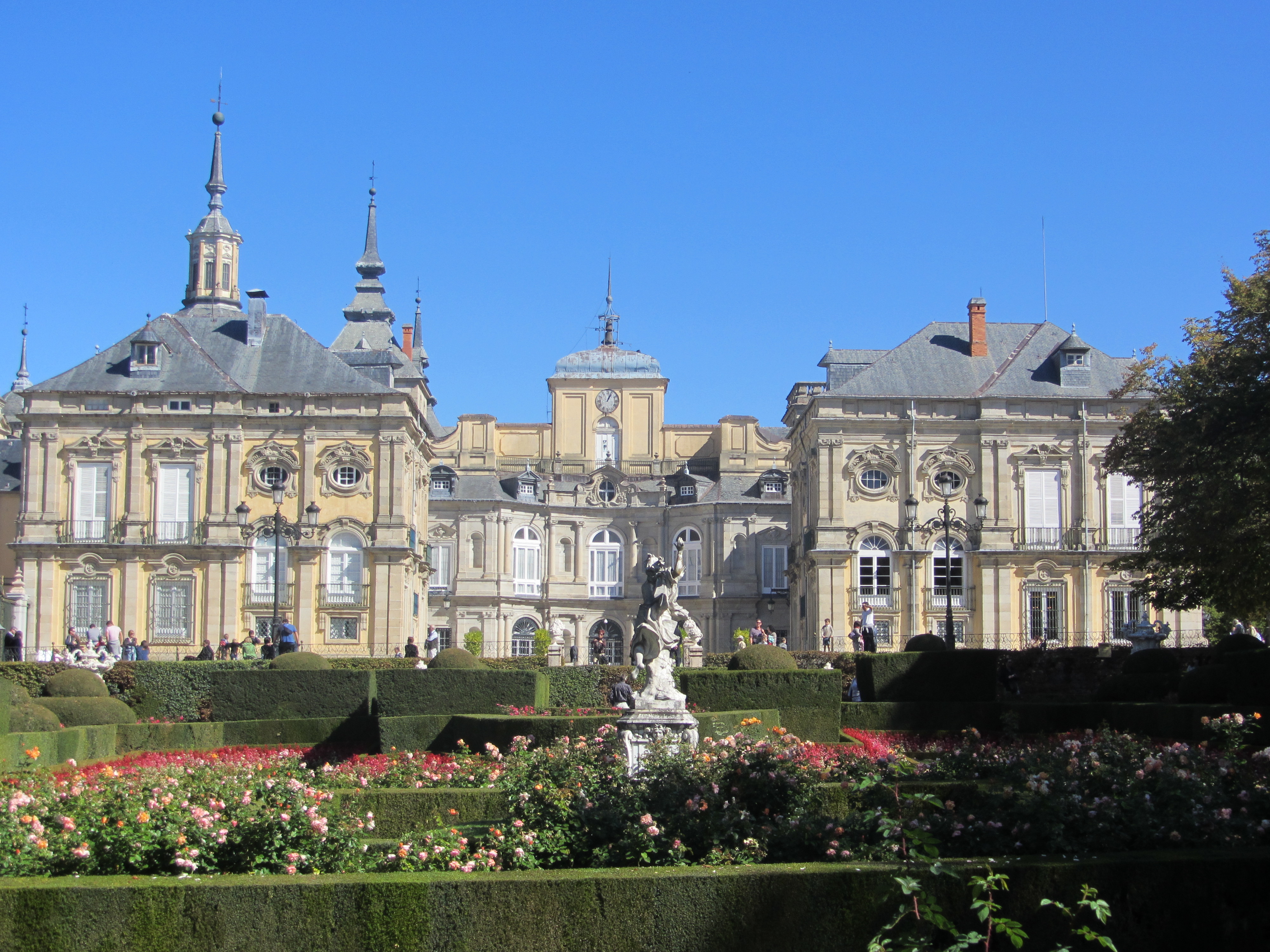
La Granja is an 18th century palace in the town of San Ildefonso and was the summer residence of the royal family under Phillip V.  Constructed during the reign of the Bourbons, the palace and gardens are modeled in the French style after Versailles. The woodlands which surround it are extensive and include even a labyrinth which can be quite difficult to find your way out of if you lose your bearings. (Parents were shouting for their lost children across the tall spiraling bushes.) The numerous fountains which adorn the gardens are beautifully sculpted, but are only brought alive by water two days out of the year.

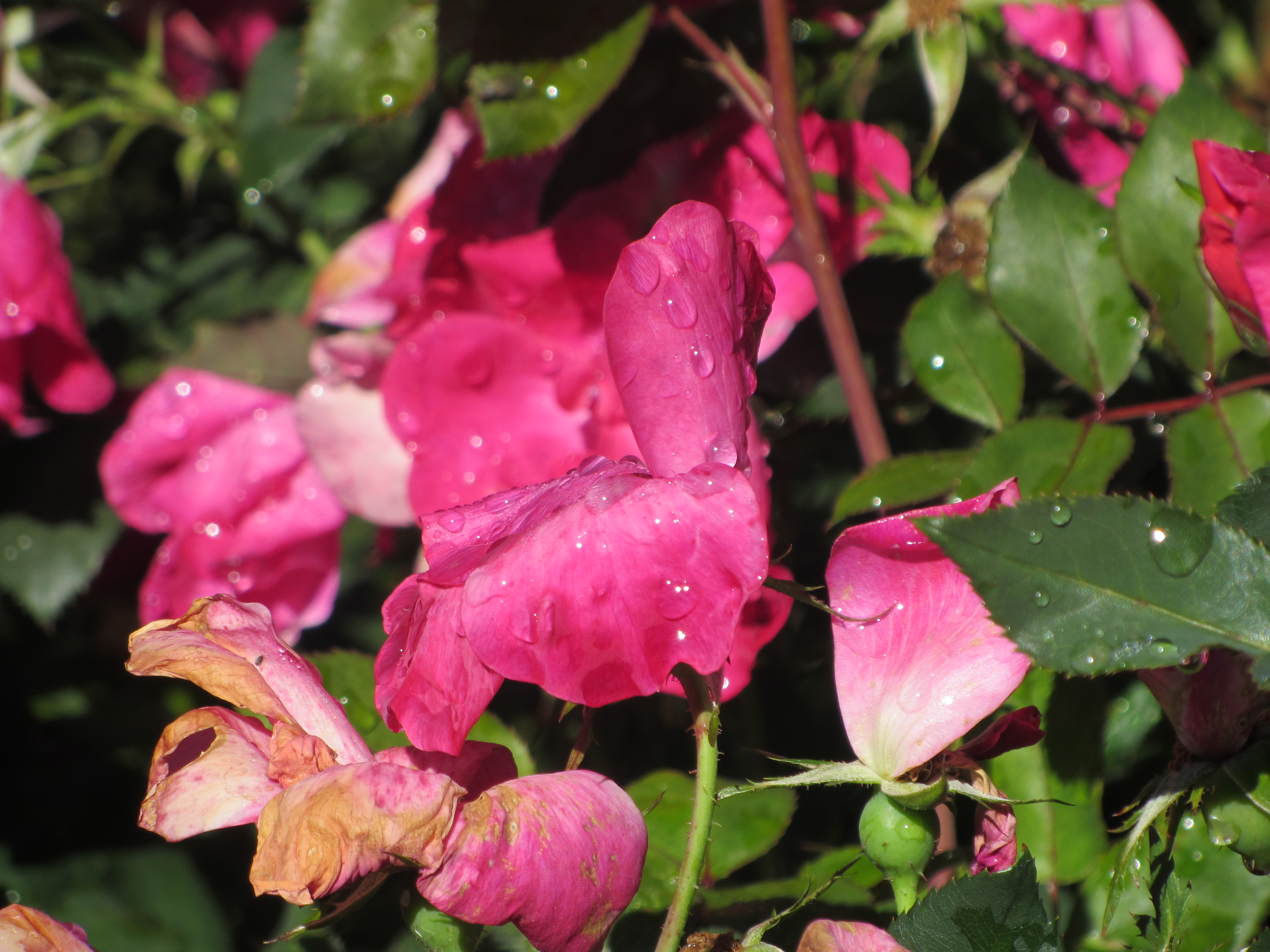
Pink roses seem to be a theme this season.
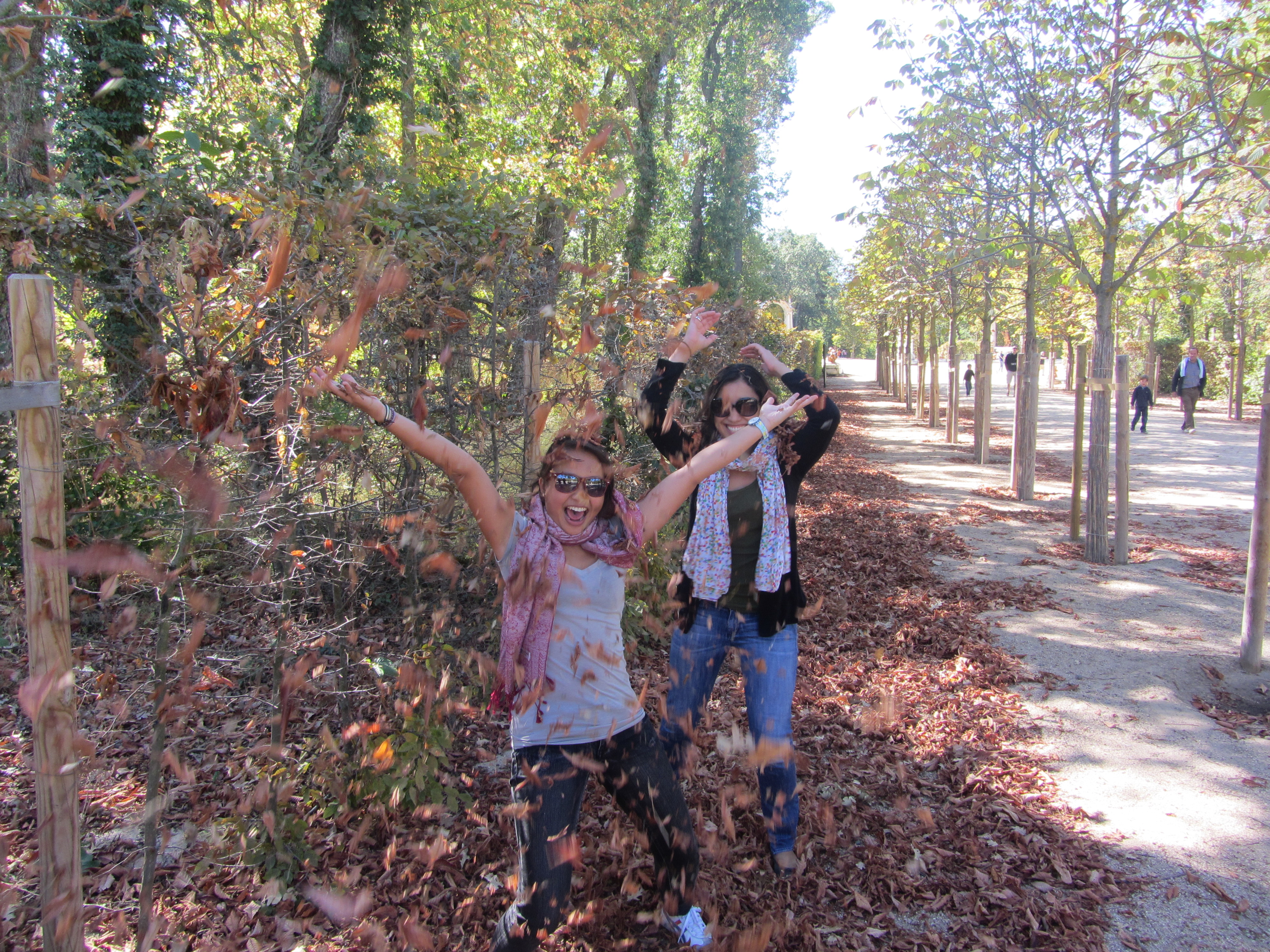
How better to celebrate autumn than by flinging about armfuls of leaves with a buddy? That was definitely the highlight of the week.
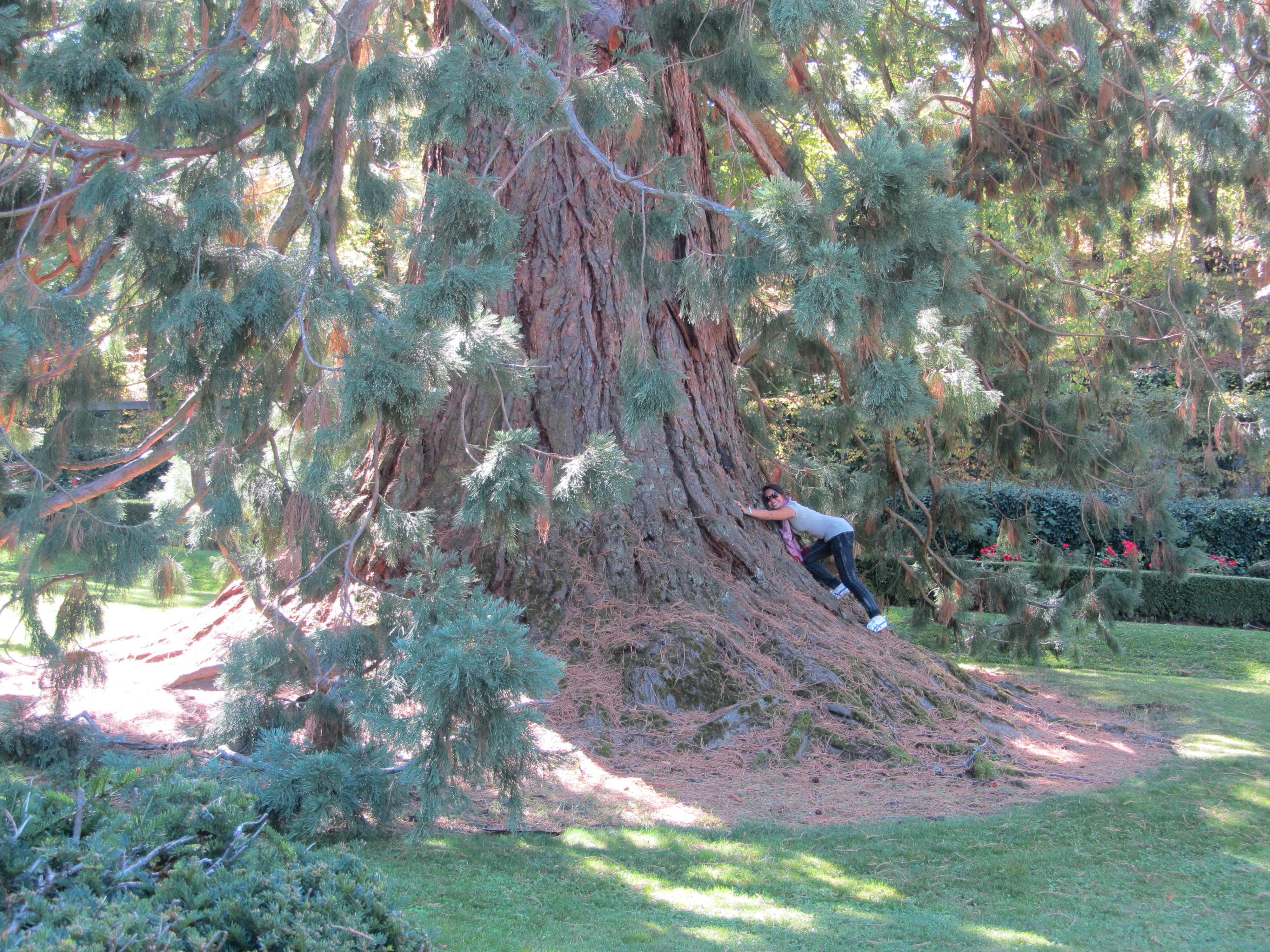
Another must is tree-hugging. I showed my appreciation to the giant forces of Mother Nature.

And now, this only leaves buying a giant pumpkin, making pumpkin pie, visiting a haunted house, getting a costume, watching a scary movie then regretting it later, and hosting a pumpkin carving contest costume party (which will probably not occur).

Javi: I’m 37 and you want me to host a pumpkin carving contest???
Me:  It’s fun for everyone!!

Unbreakable cultural boundaries.

What Can My Left Hand Say?

In response to We Write Poems’ Prompt #74, which challenged us to write a poem with our left hand. It wasn’t as bad as I thought… I even went back to revise with my left hand 😀

What Can My Left Hand Say?

Like a young heart learning to write
by rote, by repeating the correct
placement of letters,
fingers focus on the scrawl
and the patient loops that intention
has to bend unhurriedly
the pace of reflection likewise lulled
to a painstaking craft
the shapes of the words as
when I used to copy lines
as a child just to rehearse
the texture of ball bearing on
clean paper and the authority
of recycling what others meant
so I could practice with unsteady hand
what I wanted to mean
or what the blueprint
of each sound in each thought
wanted me to signify

Menorca: A Snorkeler’s Paradise

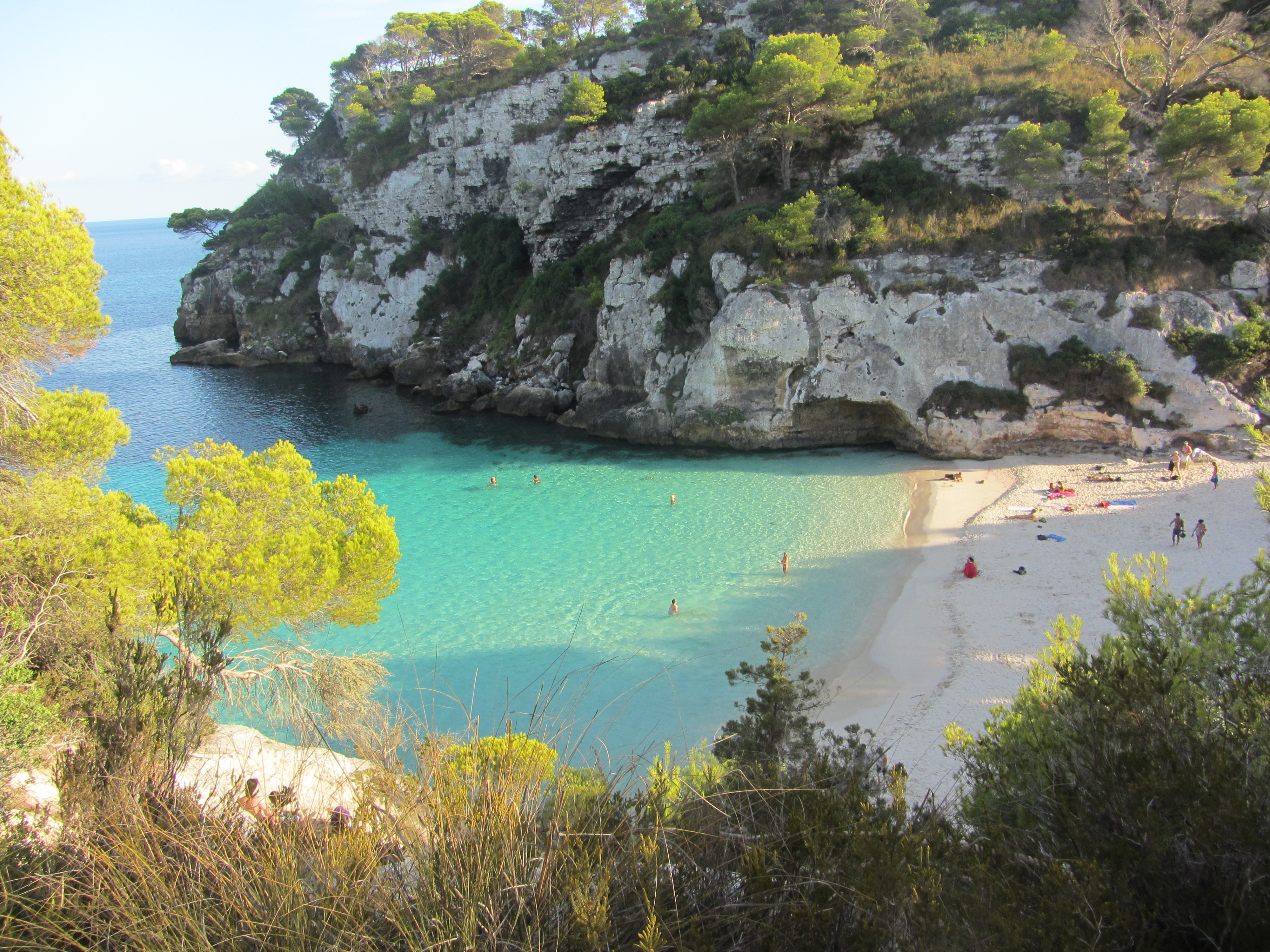
1. Dirt trails shaded by pine trees which form part of the ancient “Cami de Cavalls,” or “Road of Horses,” slope gently uphill, downhill, leading to Menorca’s southern coves. The Cala Pregonda, like almost all of the island’s coves, rivals an aquarium. Through its shallow turquoise waters one can see perfectly the silver fish darting about, and sometimes the small purple jellyfish that float to the surface. It’s hard to believe that in a place as inspiring as this, there is almost no one, just a handful of beach-goers. All the other tourists have flocked to the more well-known, easier-to-access beaches.

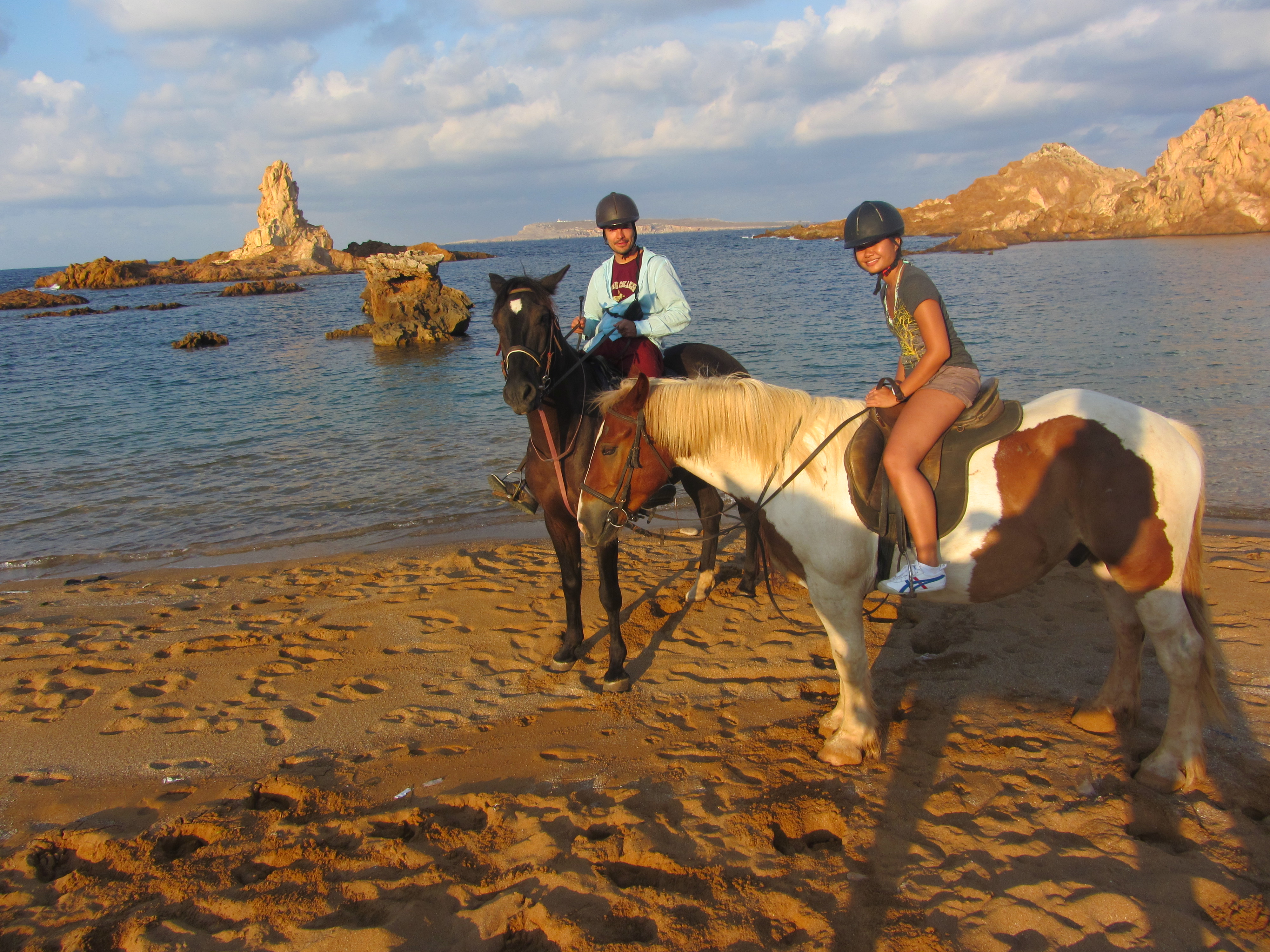
2. There is something about horses that I’ve always loved. Maybe it’s those movies in which Mongolian horsemen gallop wildly through the desert in a war of passion, robbing the ivory combs and hearts of young women in caravans. They are majestic, powerful animals, especially the Menorcan breeds. Black, elegant, and calm, these horses are show-cased during celebrations and trained to rear up on their hind legs in a fierce dance,  inches from spectators. We went horse-back riding on less elegant, yet no less worthier, creatures on a two-hour tour through dirt tracks, past beaches, all the way to Cala Pregonda. The steady plodding of their hooves, though not the lightning gallop of the Mongols, evoke the tranquility of these landscapes.

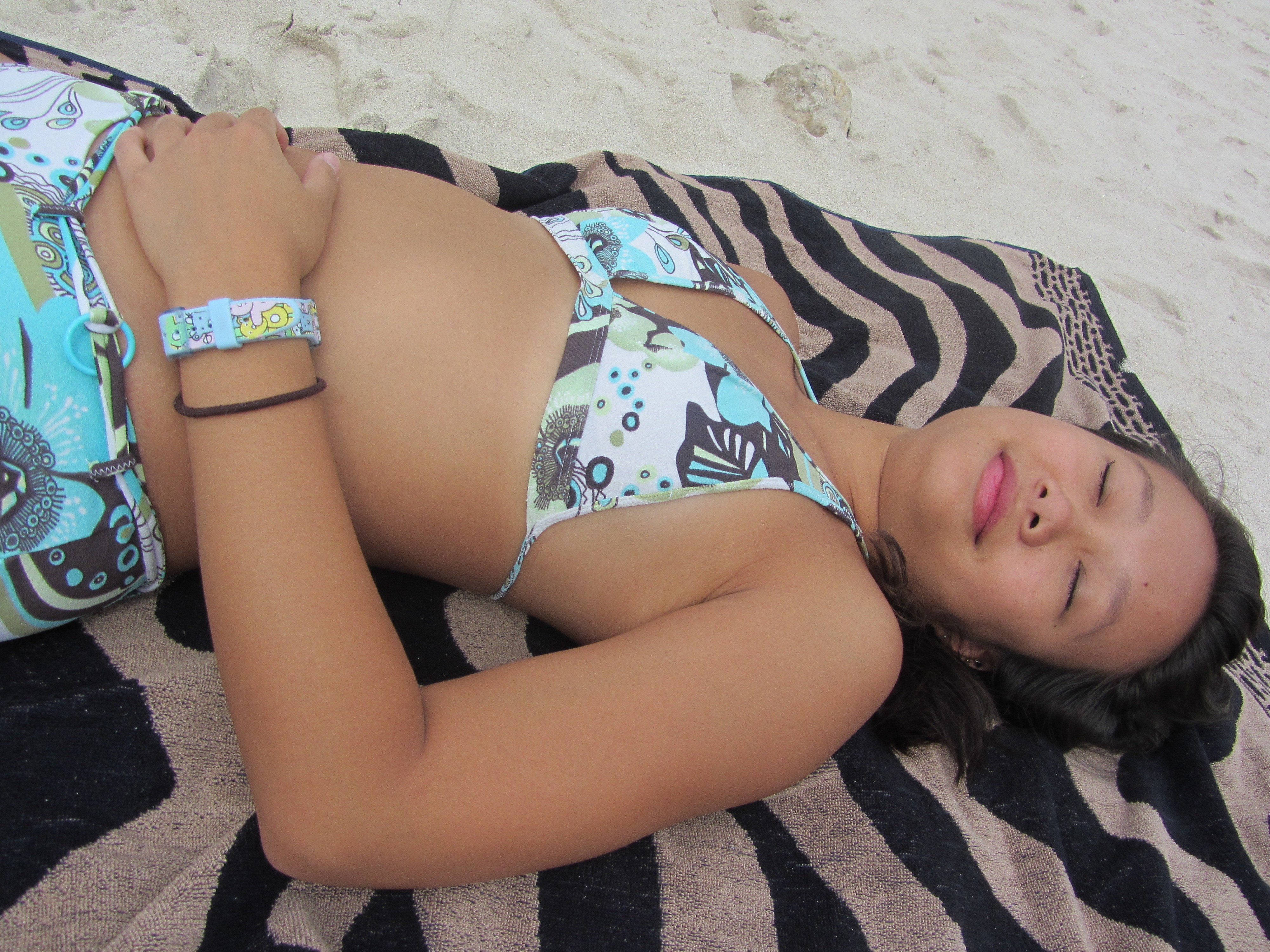
3. The Mediterranean is for snorkeling. There is nothing like submerging the body underneath its docile waters and hearing just your slow breathing, perhaps the tick tick of hundreds of fish nibbling off the rocks. This world has nothing to do with the one above, with its dark hiding places, its slow, dreamlike movements, the buoying, lulling currents, its trove of finned creatures. I am afloat and breathing, I believe momentarily that I’m a fish, that I belong underwater. And all those dreams of water from childhood seem to return in a strange rush, as if this isn’t quite reality. I roam the great rocks, I poke my head into crevasses. When the corals end suddenly and the ocean floor plummets into a murky abyss, I feel a slight pang of fear, of wonder. I swim off the edge daringly and pause, trying to make out any creatures that may surface from the depths. Stillness. I swim back towards shore.

4. Sleep is deep after a day on the beach. It allows for dreams that are clearer, that are sometimes difficult to discern from real life in their vivid moments. One morning I dream about my house. In the kitchen there is a large fish with black stripes moving through the air as if it were swimming, its tail flipping back and forth. I am bewildered. I reach out a hand to try to touch it. It scurries away, slipping into the basement. I ask my mother how a fish can swim like that out of water, and she says, “Fish have evolved from the creatures they used to be; it’s amazing what a species can adapt to.” I open the basement door hesitantly, and behind it an entire school of fish of different sizes and colors float in the air, ready to flit into the kitchen. With alarm adding to my confusion, I quickly close the door.

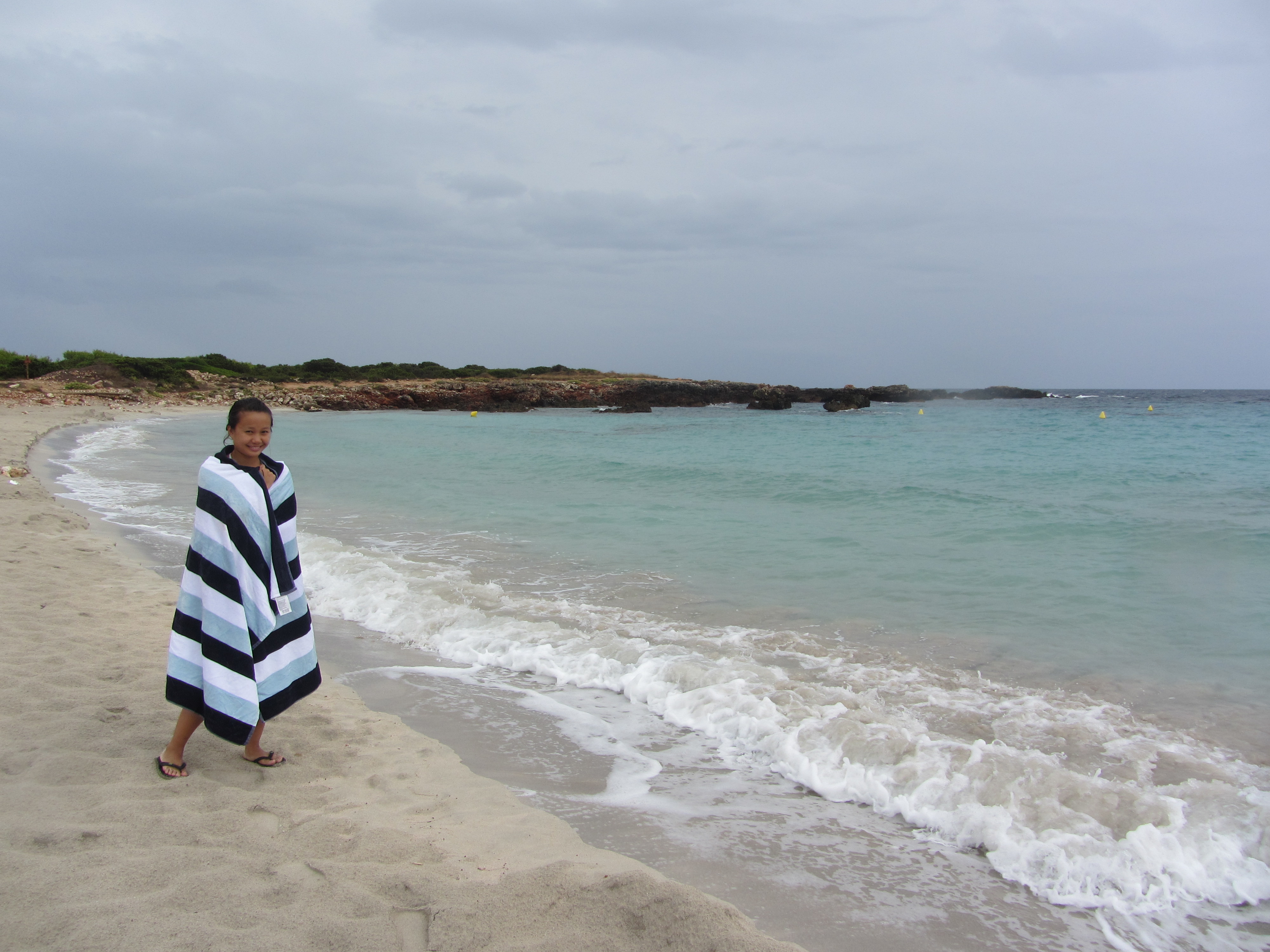
5. When it rains on a beach holiday, what do you do? Veto your partner’s serious suggestion of waiting out the rain in a dank beach cave. Eat a huge, tasty Menorcan-style lunch (their stuffed eggplants and cheese are delicious), then go to the arcades and start a tournament: basketball, hockey shots, foozball, billiards. Win twice at billiards 😀 . Wander the town looking for souvenirs, then head towards the beach with an oversized towel to take in its lonely, drizzly state.

6. Menorca’s regulations, which conserve the natural state of its beaches and forests and prohibit the construction of houses or hotels near its shores, make its experience much more authentic and less touristy than its neighboring islands. The raw beauty of its isolated beaches rival even those of Formentera. Having a whole cove to yourself to snorkel is a treat.

7. It’s hard to get beached-out here, even after visiting almost 10 different coves in 6 days. They are all spectacular, and the best ones make you work to get there by trekking, sometimes through hilly desert-like areas, sometimes through refreshing pine forest. The pace of life here is extremely relaxed, especially at the tail end of the tourist season, late September. Bowling alleys and bars remain empty, and as the sun slowly dips in late afternoon, our lengthening shadows are among the only few briefly inhabiting the fine sand of the cove.